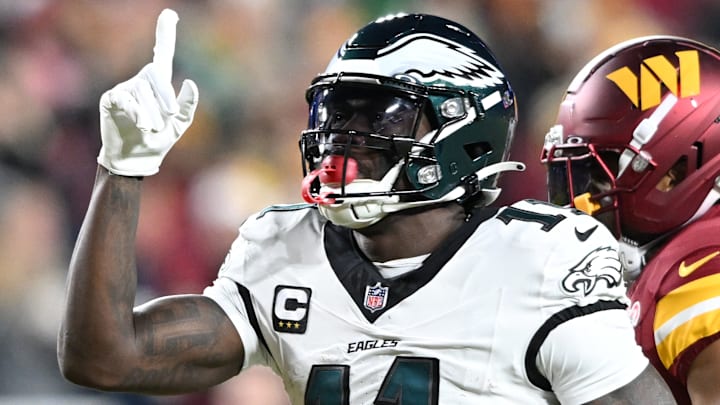
In an era when athletes’ words can travel faster than their highlights, Philadelphia Eagles wide receiver A.J. Brown has once again found himself at the center of a national conversation — not for a catch or a touchdown, but for a message about kindness, tone, and how public figures are remembered.
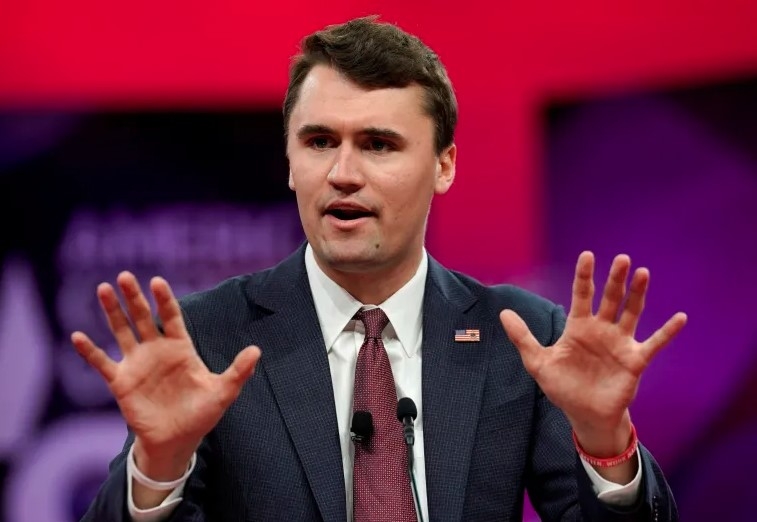
Following widespread online discussion surrounding reports and commentary about Charlie Kirk, Brown shared a brief but pointed message on social media that immediately drew attention across sports and political spaces alike.
“If you want to be remembered kindly, then speak kindly while you’re still here,” Brown wrote.
The post, reflective and understated, quickly went viral. But just as quickly, it sparked backlash — with critics questioning Brown’s intent, timing, and whether athletes should comment on topics outside football. Within hours, the Eagles star responded again, leaving no ambiguity about his position.
“I meant what I said,” Brown wrote. “We need kindness — now more than ever.”
.jpg)
A Message That Struck a Nerve
Brown’s original post did not name individuals directly, nor did it make political arguments. Instead, it framed a broader idea: that words matter, and that how people speak while alive often shapes how they are remembered.
Despite its general tone, the message landed in a highly polarized environment. Some readers interpreted it as a moral critique. Others viewed it as a call for reflection in a time of heightened tension and online hostility.
The reaction underscored a reality modern athletes face daily — even neutral or values-based statements can become flashpoints once they intersect with cultural or political discourse.
Backlash Comes Fast — and Loud
Criticism emerged almost immediately. Commentators on social media accused Brown of being vague, opportunistic, or overstepping his role as an athlete. Others questioned whether professional players should engage in conversations tied to public figures or ideological divides.
But there was also strong support.
Fans and fellow athletes praised Brown for using his platform to emphasize empathy and restraint, arguing that calls for kindness should not be controversial — regardless of context.
The divide reflected something larger than one post: a national fatigue with online outrage, and a simultaneous struggle over who gets to speak, and about what.
Brown Doubles Down — Calmly
Rather than retreat or clarify defensively, A.J. Brown chose a different route. His follow-up message was direct, calm, and unapologetic.
“I meant what I said. We need kindness — now more than ever.”
There was no escalation. No insults. No attempt to reframe or soften the message.
In doing so, Brown reinforced the very point he was making: tone matters.
Observers noted that the follow-up stripped the controversy of much of its momentum. By refusing to engage in argument, Brown shifted attention back to the core idea — that kindness, especially in moments of public tension or loss, is not weakness, but intention.
Leadership Beyond the Field
A.J. Brown has never been a quiet figure. Since arriving in Philadelphia, he has been vocal about accountability, mental health, preparation, and the responsibility that comes with influence.
This moment fits into that broader pattern.
In locker rooms, Brown is known as an emotional leader — someone who speaks openly, challenges teammates, and embraces uncomfortable conversations. Online, that same authenticity sometimes collides with the speed and severity of modern discourse.
But to many fans, that consistency is exactly why his words resonate.
“He didn’t attack anyone,” one Eagles fan wrote. “He reminded people how to act.”
The Athlete’s Platform in a Divided Moment
The episode once again raises a familiar question: What role should athletes play in public conversations?
For decades, sports figures were encouraged to “stick to the game.” Yet as social media erased barriers between public and private voices, expectations changed. Fans now see athletes not just as performers, but as people with values, opinions, and lived experiences.
Brown’s message didn’t advocate policy or ideology. It advocated tone.
And in a digital environment often defined by cruelty, sarcasm, and outrage, even that can feel radical.
Why This Moment Matters
What makes this exchange notable isn’t the backlash itself — that has become routine. It’s the response.
Brown didn’t delete the post. He didn’t apologize for interpretation. He didn’t redirect attention back to football.
He stood by the idea that how we speak to one another matters, especially when emotions are high and attention is fragmented.
That stance, quiet as it was, resonated with many who feel worn down by constant conflict.
The Eagles’ Season — and Perspective
As the Eagles push deeper into the season, moments like this add texture to the identity of the team. Philadelphia has long embraced players who speak plainly and stand their ground.
For Brown, the timing is notable. In the middle of playoff positioning, media scrutiny, and weekly pressure, he chose reflection over silence.
Not everyone agreed. But agreement was never the point.
Final Thoughts: Words, Memory, and Accountability
In the end, A.J. Brown’s message was simple — and perhaps that’s why it landed so forcefully.
“If you want to be remembered kindly, then speak kindly while you’re still here.”
In a culture obsessed with reaction and rebuttal, Brown chose principle over performance. Whether fans supported or criticized the post, the conversation it sparked revealed something important: kindness still provokes discussion — because it still matters.
And for A.J. Brown, that message is one he’s clearly willing to stand behind.