The Death of a Prosecutor and the Death of Decorum: A Senator’s Stinging Rebuke
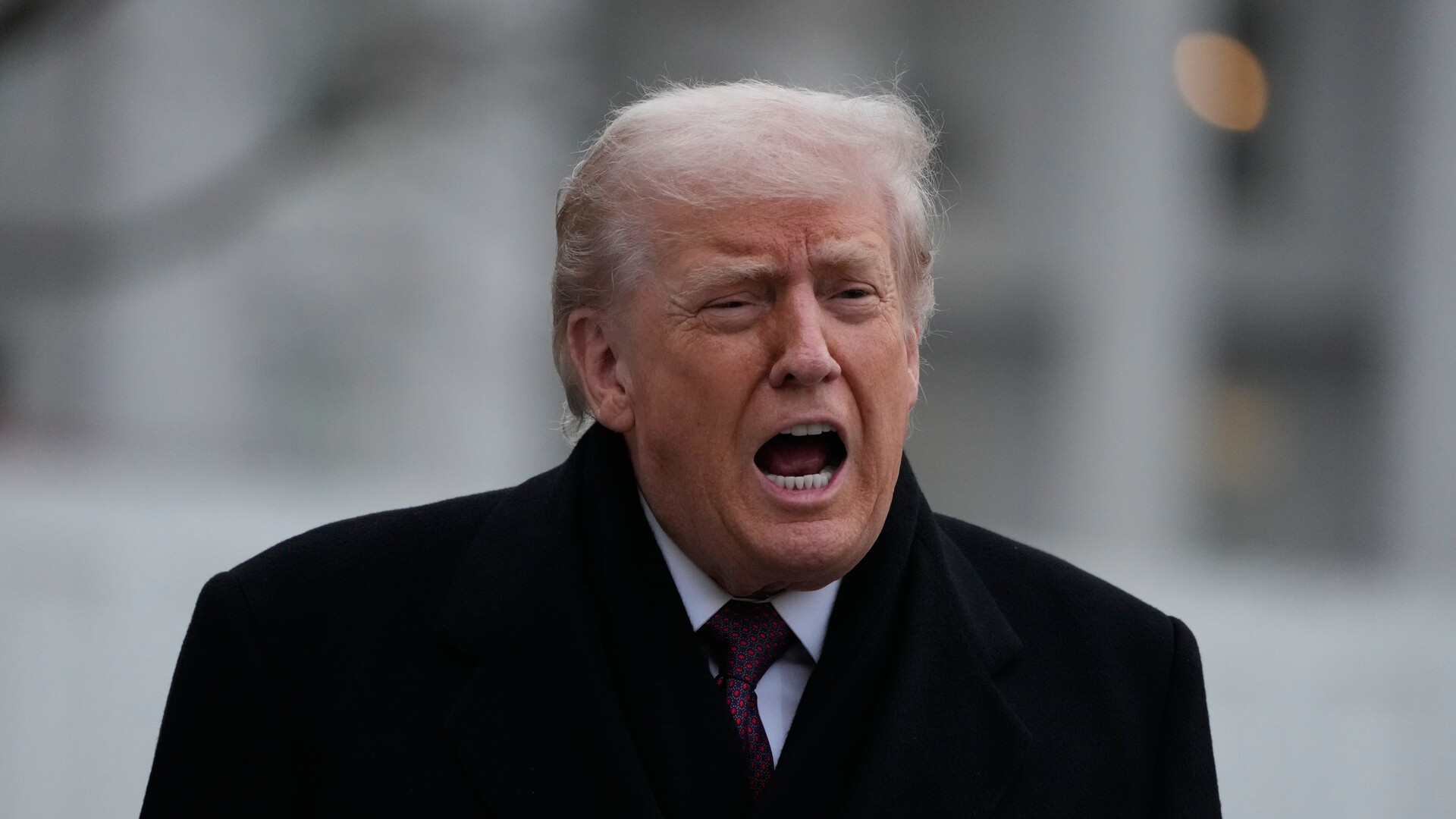
The fragile truce of American political discourse, already frayed by years of partisan warfare, appeared to reach a definitive breaking point this week following the passing of Robert S. Mueller III. Mr. Mueller, the former F.B.I. director and Special Counsel whose stoic investigation into Russian interference defined the first Trump term, died at a moment of profound national tension. But it was not the passing of the decorated Marine veteran that ignited a firestorm on Capitol Hill; rather, it was the jubilant, unfiltered reaction of Donald J. Trump. In a series of posts on Truth Social that shocked even his most seasoned critics, the former president openly celebrated the demise of the man who once sought to untangle the web of his campaign’s foreign contacts. “Good. I’m glad he’s dead,” Mr. Trump wrote in a digital outburst that bypassed the traditional filters of mourning. “He can no longer hurt innocent people.” The response was immediate, visceral, and led by a chorus of lawmakers who saw in the president’s glee a final, dark transformation of the American presidency into a vessel for personal vendetta.
Senator Chris Murphy, the Connecticut Democrat known for his measured but increasingly urgent rhetoric on the Senate floor, took to the airwaves of Meet the Press to deliver a blistering assessment of the commander-in-chief’s character. Speaking to host Kristen Welker, Mr. Murphy did not reach for the usual euphemisms of “unpresidential” or “inappropriate.” Instead, he described the president’s gloating as “disgusting and heartbreaking,” framing it as a direct assault on the very concept of public service. “It is just disgusting and so heartbreaking that we have a president who’s cheerleading the death of American citizens,” Mr. Murphy said, his voice carrying a weight of exhaustion that resonated across the Aclantic. To Mr. Murphy, the vitriol directed at Mr. Mueller was not merely an isolated act of cruelty; it was a symptom of a deeper, more systemic corruption that has sought to dismantle the guardrails of the law since Mr. Trump first took the oath of office.
The clash between Mr. Murphy’s indignation and Mr. Trump’s celebration highlights a fundamental divergence in how the American “ruling class” views the machinery of justice. Robert Mueller, a man of few words and rigid adherence to protocol, represented an era of the Justice Department that prized institutional stability above all else. His investigation, while ultimately inconclusive on the question of criminal conspiracy, became a Rorschach test for the nation’s soul. For the president, Mr. Mueller was the face of a “Deep State” hit job; for his critics, he was the last line of defense against an executive branch that viewed itself as above the law. Mr. Murphy’s characterization of Mr. Trump as the “most corrupt president in the history of the country” is a rhetorical escalation that reflects a Senate Democratic caucus that has moved past the hope of bipartisan reconciliation and into a posture of existential defense. The Senator’s words suggest that the president is not merely rooting against a political rival, but against the very idea of accountability itself.
This latest episode of rhetorical violence occurs against a backdrop of significant institutional erosion. According to recent data from the Pew Research Center, public trust in the presidency and the judicial system has hit historic lows in 2026, with 68 percent of Americans expressing concern that political leaders no longer respect the “basic rules of human decency.” Mr. Trump’s “cheerleading” for the death of a prosecutor who once investigated him serves as a potent data point for those who argue that the guardrails have not just moved, but have been entirely incinerated. By calling for the end of those who “hold him accountable to the law,” the president is signaling a future where the legal system is not an arbiter of truth, but a weapon of personal loyalty. Senator Murphy’s intervention on Meet the Press was an attempt to reclaim the moral high ground, but in a fractured media landscape, his “heartbreaking” assessment often struggles to compete with the visceral, high-engagement nature of a presidential death-wish.
The timing of this vitriol is particularly sensitive given the current geopolitical instability. As the United States navigates escalating tensions in the Middle East and a shifting economic landscape with its northern neighbors, the internal focus on a dead prosecutor feels like a regression to the traumas of the past. Yet, for Mr. Trump, the past is never dead; it is a ledger of perceived slights that must be settled. His obsession with Mr. Mueller, even in the latter’s grave, suggests a leader who is unable to transition from the grievances of a defendant to the responsibilities of a head of state. Financial analysts have noted that this constant state of domestic “warfare” has contributed to a “stability discount” in U.S. markets, as international investors grow wary of a political system that appears more interested in necroptic feuds than in forward-looking policy. Mr. Murphy’s critique, while grounded in morality, also points to this practical concern: a nation led by a man who celebrates the death of his investigators is a nation that cannot provide the predictable environment necessary for global leadership.

Furthermore, the “Mueller Meltdown” as it has been dubbed in digital circles, serves to galvanize the Democratic base ahead of the 2026 midterms. Mr. Murphy is not just speaking to the conscience of the nation; he is speaking to a donor class and a volunteer base that is increasingly motivated by a sense of moral outrage. By framing Mr. Trump’s actions as “heartbreaking,” he is tapping into a reservoir of empathy that he hopes will translate into electoral energy. The Senator’s insistence that Mr. Mueller was “amongst many who have been trying to hold this president to account” serves as a rallying cry for a legal and political movement that sees itself as the “resistance” within the system. However, the efficacy of this strategy is debated by G.O.P. strategists, who argue that Mr. Trump’s base views his attacks on the “dead prosecutor” as a justified final word against a man they believe tried to “overturn a democratic election.”
In the halls of the Justice Department, the reaction to the president’s posts has been one of quiet, stunned professional offense. Career officials, who served under Mueller when he was the F.B.I. director during the post-9/11 era, describe a sense of “total abandonment” by the executive branch. The lawsuit filed by purged F.B.I. agents—noted in separate legal filings this month—cites a culture of “fear and retribution” that is only validated by the president’s public celebration of a former director’s death. For these civil servants, the question is no longer whether the FBI is independent, but whether any servant of the law can expect protection from the very government they serve. Mr. Murphy’s public blast is a signal to these workers that they still have allies in the legislative branch, even as the “most corrupt president” in history openly wishes for their demise.
As the nation prepares to lay Robert Mueller to rest, the shadow of the Truth Social rants looms over the funeral preparations. The 14-day window of national mourning that would typically follow the passing of such a significant public figure has been replaced by a 14-day window of escalating political combat. Whether Senator Murphy’s stinging rebuke can move the needle of public opinion, or if it will simply be another “disgusting” chapter in a book of endless grievances, remains to be seen. What is clear, however, is that the death of Robert Mueller has not brought closure to the “Russia era.” Instead, it has exposed a raw, bleeding wound in the American body politic—a wound that the current president seems intent on saltng at every available opportunity. In this climate, the “heartbreak” described by Mr. Murphy is not just for a man, but for a system that once believed it could hold its leaders to account without fear of a presidential cheer for their passing.
Would you like me to look into whether any other members of the Senate Intelligence Committee have issued formal statements regarding this incident?