In a ruling that immediately reshaped the political landscape in two of the country’s largest states, the Supreme Court on Thursday allowed Texas to implement its newly drawn congressional map for the upcoming midterm elections — a map that is expected to deliver Republicans as many as five additional seats. Yet buried within the Court’s decision was a concurring opinion that unexpectedly signaled potential trouble for conservatives in an ongoing redistricting fight in California, fueling widespread speculation about a political reversal that could impact both parties’ long-term strategies.
The unsigned order, issued through the Court’s emergency “shadow docket,” reinstated the Texas map after a lower federal court declared it unconstitutional. That court had concluded that Texas lawmakers unlawfully diluted the electoral influence of minority voters by reorganizing districts in ways that favored Republican incumbents.
The Supreme Court, however, disagreed. The majority argued that the lower court “failed to extend appropriate deference” to state legislators and intervened too close to an active primary process, thereby risking electoral instability. As a result, Texas Republicans — led by Gov. Greg Abbott — immediately celebrated the ruling as a landmark win. Abbott posted on social media that Texas was now “officially and legally more red,” adding that the map better reflected “the values of our state.”
Political analysts say the ruling provides an important strategic boost to House Republicans, who hold a narrow majority and are relying on favorable district lines to protect vulnerable seats heading into the next election cycle. “This gives the GOP a significant structural advantage in one of the nation’s largest congressional delegations,” said Finn Gomez, a political director at CBS News. “And it may encourage other Republican-controlled states to pursue mid-decade redistricting under similar justifications.”
But while the Texas decision grants Republicans a strong hand in one state, it may simultaneously weaken their position in another. Within Justice Samuel Alito’s concurrence — joined by Justices Clarence Thomas and Neil Gorsuch — analysts noted specific language referencing California’s newly redrawn congressional map, approved by voters under Proposition 50. That map eliminates five Republican districts while creating five new Democratic-leaning ones.
Alito wrote that Texas’s map, “like the map subsequently adopted in California,” was driven by “partisan advantage, pure and simple” — a noteworthy characterization given that partisan gerrymandering, unlike racial gerrymandering, remains legal under Supreme Court precedent. Legal scholars say the comment may signal that the Court’s conservative bloc views California’s map as constitutionally permissible for the same reasons Texas’s map was upheld.
For Democrats in California, that implicit endorsement represents a rare glimmer of good news. Gov. Gavin Newsom and state officials have argued fiercely that their map is a lawful counterweight to aggressive Republican redistricting in states across the South and Midwest. Former President Donald Trump, along with California GOP leaders, has sued to block the map, alleging that it was drawn with impermissible racial considerations.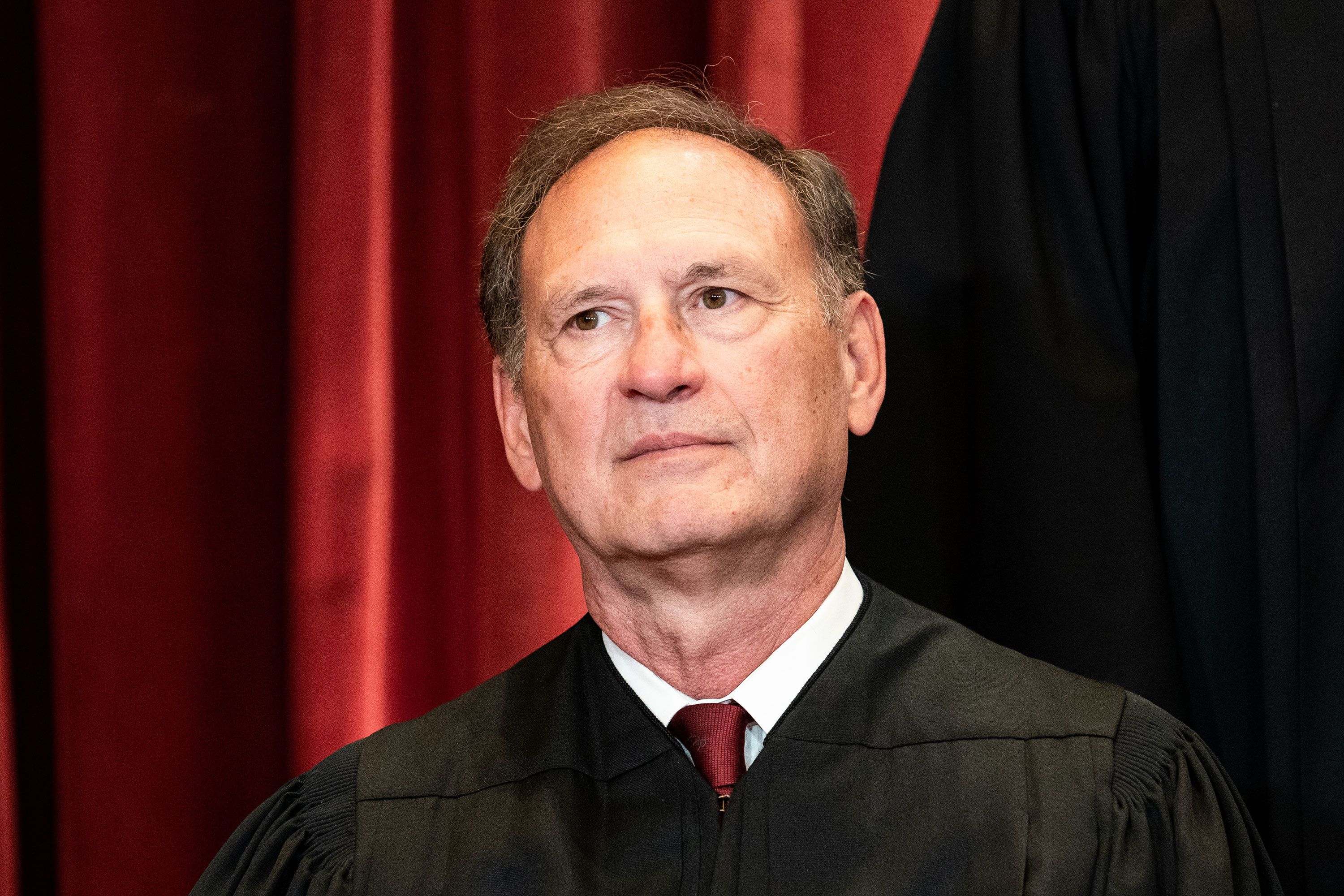
The Court’s liberal justices strongly objected to the Texas ruling. Justice Elena Kagan, joined by Justices Sonia Sotomayor and Ketanji Brown Jackson, issued a lengthy dissent rebuking the majority for overturning a 160-page lower court decision after “a perusal over a holiday weekend.” Kagan warned that permitting Texas to enforce the map “disserves the millions of Texans whom the district court found were assigned to their new districts based on their race” and undermines longstanding protections for minority voters.
Civil rights groups echoed her concerns, arguing that the decision weakens essential federal safeguards and could embolden states to disregard racial fairness in the redistricting process. Meanwhile, Republican leaders insist that state legislatures must retain broad authority to determine electoral boundaries and that accusations of racial bias are politically motivated.
The broader national impact remains uncertain. Yet political strategists on both sides believe the Court’s Texas decision — and the subtle signal it appears to send regarding California — will shape redistricting battles across the country. “This isn’t just about Texas or California,” said one Democratic consultant. “This is about the rules of engagement for the next decade.”
With both parties preparing for high-stakes midterms and the presidential election cycle now accelerating, the Supreme Court’s ruling ensures that the fight over who draws the maps — and how — will remain one of the most consequential political conflicts in the United States.