In a shocking revelation that has sent ripples through the NFL, sources confirm that the Green Bay Packers came dangerously close to trading tight end Luke Musgrave, a second-round draft pick, for a Day-3 selection. The deal reportedly involved negotiations with either the Denver Broncos or the Jacksonville Jaguars, and insiders say it was well on its way to completion before an unexpected injury threw the entire plan into chaos.

The trade discussions, which have now come to light, could have reshaped both the Packers’ roster and the NFL tight end landscape. Musgrave, a promising young player, was drafted with high expectations, but it appears that Green Bay was willing to consider moving him for a future draft asset. The proposed return — a fifth-round pick — indicates that the Packers were looking for depth and flexibility, possibly to address other pressing needs on the roster.
According to insiders, the negotiations were serious. “The Packers were exploring every option to maximize their draft capital,” one source said. “Musgrave was on the table, and the Broncos and Jaguars were both very interested. It was a real possibility until Tucker Kraft got hurt.”
The Role of Tucker Kraft’s Injury
The injury to Tucker Kraft, another tight end on Green Bay’s roster, dramatically changed the team’s calculus. Kraft’s sudden sidelining created an immediate need for depth at the position, forcing the Packers to reconsider moving Musgrave. In essence, the team pivoted from potential asset management to roster preservation, ensuring that they would maintain a capable tight end corps to support quarterback Jordan Love and the offensive scheme.
Analysts believe that this twist highlights the unpredictability of NFL roster management. Teams must constantly balance long-term strategy with immediate needs, and injuries often force abrupt changes to even the most carefully laid plans. “This is a perfect example of how fluid NFL rosters are,” said a league analyst. “One injury can completely derail a trade or a draft strategy.”
Luke Musgrave: Talent on the Rise
Musgrave’s near-move has drawn attention to his potential as a player. Drafted in the second round, he is widely regarded as a versatile tight end with both blocking and receiving capabilities. While his rookie season had ups and downs, coaches and scouts have praised his athleticism, route-running ability, and football IQ.
Had the trade gone through, Musgrave would have joined a Broncos or Jaguars offense looking to inject youth and playmaking ability into the tight end position. In Denver, he could have been paired with emerging receivers to stretch the field, while in Jacksonville, his skill set might have complemented a developing offensive scheme under the team’s current coaching staff. Both scenarios suggest that Musgrave had potential to make an immediate impact — a fact that makes the halted trade even more dramatic.
Implications for the Packers
The failed trade also raises questions about Green Bay’s broader strategy. While the team clearly values Musgrave as a roster asset, the fact that they considered trading him suggests a willingness to take calculated risks to maximize draft capital. The incident underscores the delicate balance NFL teams face: developing young talent while maneuvering to improve the roster for both short-term performance and long-term success.
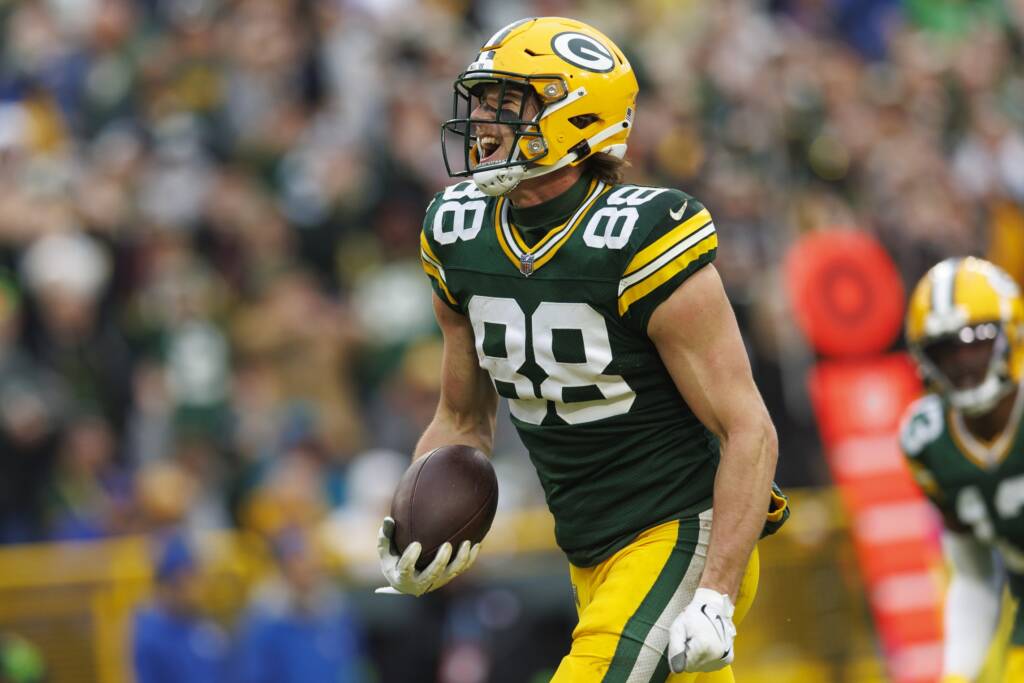
Moreover, this episode provides insight into how injuries can unexpectedly shift team priorities. The Packers’ decision to retain Musgrave after Kraft’s injury reflects a pragmatic approach, ensuring that Jordan Love has adequate support at the tight end position. The decision may ultimately pay dividends if Musgrave continues to develop and contribute meaningfully to the offense.
Fan and Media Reactions
News of the nearly completed trade immediately ignited discussion among fans and analysts alike. Social media platforms erupted with speculation about how Musgrave might have fit with the Broncos or Jaguars, and whether Green Bay made the right call in keeping him. Some fans expressed relief that Musgrave remains with the team, citing his potential as a key asset for Love and the offense, while others lamented the missed opportunity to acquire additional draft capital.
Experts emphasize that this episode is a reminder of the dynamic nature of NFL team building. Trades, injuries, and roster adjustments can shift rapidly, often producing surprising outcomes. In Musgrave’s case, an injury that might have been seen as a setback actually preserved his opportunity to grow and make an impact in Green Bay.
Conclusion
The Green Bay Packers’ near-trade of Luke Musgrave serves as a fascinating case study in NFL roster management, illustrating how quickly circumstances can change in professional football. From a potential trade to a sudden pivot due to injury, the story highlights the precarious balance between strategy, talent development, and immediate team needs.
As the season progresses, all eyes will be on Musgrave to see if he can justify the Packers’ decision to retain him, while fans will continue to speculate on how different the league landscape might have looked had the trade gone through. One thing is certain: in the NFL, the line between opportunity and calamity is razor-thin, and sometimes, it only takes a single injury to rewrite the narrative.