Green Bay, WI — When the Packers built their new-look, star-powered defense this offseason, the blueprint wasn’t complicated. In fact, it was beautifully simple — and absolutely terrifying on paper.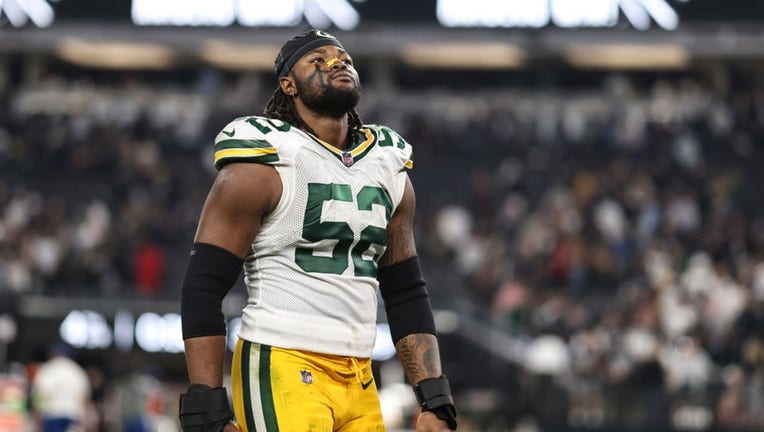
Micah Parsons, the most explosive defensive weapon of his generation, would warp offensive protections every single snap. Offenses would have no choice but to send double teams, chips, and full-slide protections toward him. Some teams would even triple-team him. And in the chaos created by that gravitational pull, Rashan Gary — a former top-12 pick with elite athletic measurables — would have the one-on-one matchups of his life.
The theory? Unstoppable.
The reality? Alarming.
Despite tallying 7.5 sacks on the year, Gary has virtually vanished from Green Bay’s defensive impact over the last three weeks. Zero sacks. Minimal pressures. And almost no disruption, even as Parsons dominates at an All-Pro level and forces offenses to tilt their entire protection scheme toward him.
It doesn’t make sense. And yet, it’s happening.
A Steep Decline Hidden in Plain Sight
If you look closely at the numbers, the warning signs are impossible to ignore.
Gary opened the season like a man possessed, generating at least four pressures in six of the first seven games. He looked like the perfect complement to Parsons — violent hands, explosive burst, and a relentless motor that punished isolated tackles.
But in the last three weeks? Gary has registered just seven total pressures, a stunning collapse for a pass rusher who should be facing more single blocks than at any point in his career.
Worse, analytics back up what the film is showing.
Pro Football Focus currently ranks Gary 61st among NFL edge rushers in pass-rush win rate at 11.4%. Parsons, by comparison, sits near the very top of the league at 24.7% — more than double Gary’s rate. Even more telling: Lukas Van Ness, who has been injured for most of this slump, still owns a higher win rate than Gary.
This isn’t a cold streak.
This is a regression.
A Quiet, Troubling Trend: His Snaps Are Disappearing
Even more puzzling is a trend that few fans noticed until this week: Gary’s snap count has quietly dropped — and sharply.
Against the Giants, Gary played just 39 snaps, fewer than Kingsley Enagbare. Parsons, in that same game, logged 61.
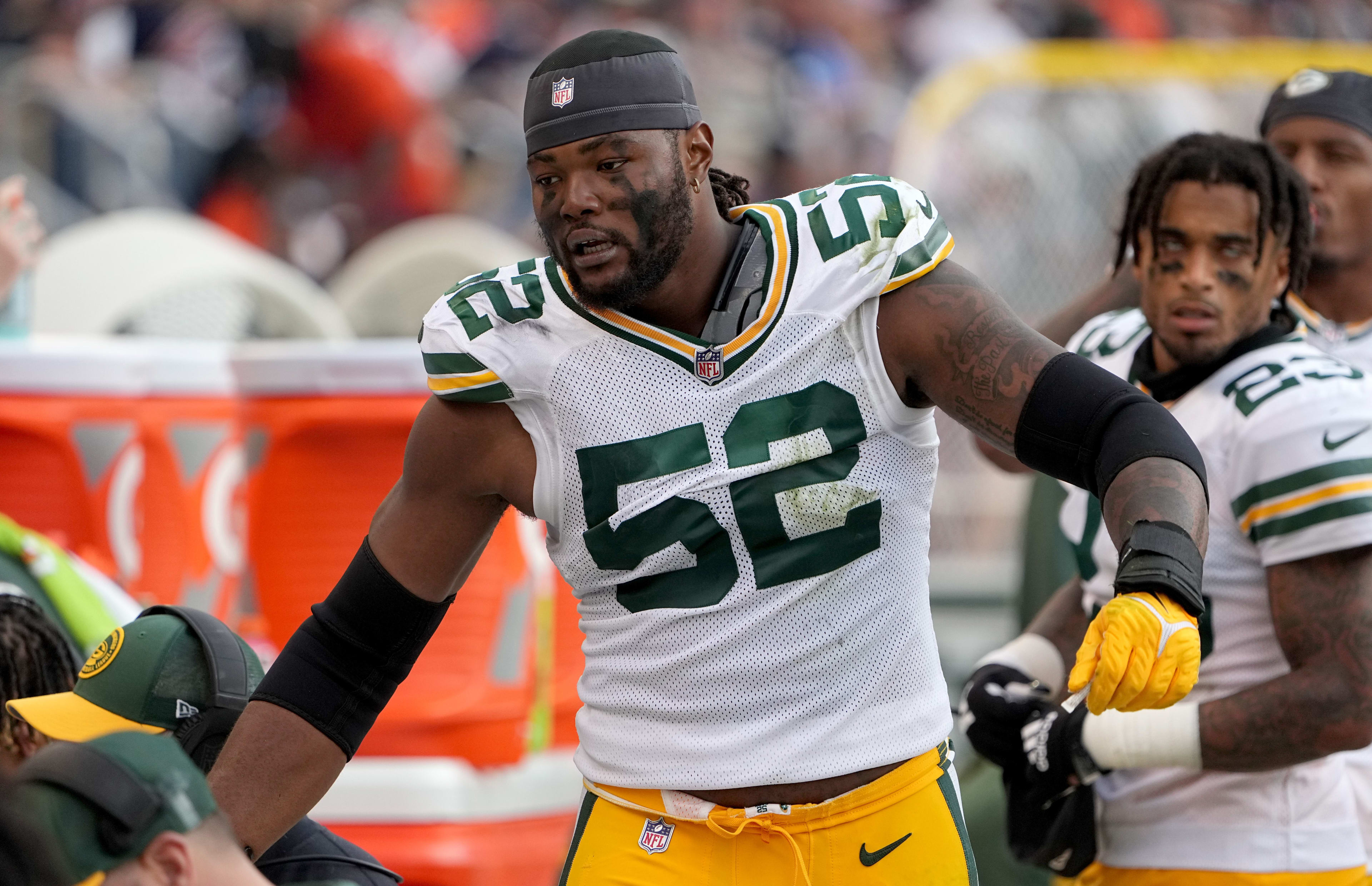
Over the last six weeks, Parsons has played 84% of Green Bay’s defensive snaps.
Gary? Just 62.5%.
That’s not a small gap. That’s the kind of percentage you see between superstar and rotational player — not superstar and superstar.
Something is off. Something the Packers don’t appear eager to discuss publicly.
A Dangerous Identity: “Parsons or Bust”
This was not the vision Green Bay had when they drafted Gary 12th overall and later paid him a four-year, $96 million contract. The plan was to build a devastating two-headed monster. The Eagles did it with Jalen Carter, Haason Reddick, Josh Sweat, and Jordan Davis. The 49ers did it with Nick Bosa, Chase Young, Arik Armstead, and Javon Hargrave.
Championship defenses stack threats.
The Packers expected to join that list.
But right now? Only half of the equation is holding up its end. Parsons is blowing up protections, winning at elite levels, and generating havoc on nearly every dropback.
Gary, meanwhile, is leaving plays on the field, losing one-on-one battles, and failing to take advantage of the favorable matchups Parsons produces.
And that creates a very real danger: if opposing offenses realize that sliding toward Parsons neutralizes Green Bay’s entire pass rush, the Packers’ defense becomes dangerously predictable.
A Crucial Turning Point for Green Bay
If the Packers want to contend deep into January, they need more than Parsons playing superhero football. They need Rashan Gary to rediscover the player he was supposed to become — the violent, explosive, game-wrecking force Green Bay believed in when they handed him franchise-player money.
The blueprint for a dominant pass rush is still there.
But unless Gary flips the switch soon, the Packers’ title hopes may rest on the shoulders of one man — and even Micah Parsons can’t carry that burden alone.