In the unforgiving world of the NFL, where fortunes can flip faster than a poorly thrown pass, the Minnesota Vikings’ gamble on cornerback Isaiah Rodgers is unraveling at breakneck speed. What started as a promising acquisition has devolved into a full-blown disappointment, culminating in a shocking demotion that has fans and analysts alike questioning his future in purple and gold. Signed to an $11 million deal over two seasons, Rodgers was supposed to be the shutdown corner Minnesota desperately needed. Instead, he’s become a cautionary tale of hype meeting harsh reality—and his exit from the Vikings now feels not just likely, but inevitable.

The Rise That Was Too Good to Be True
When the Vikings inked Rodgers last offseason, optimism was high. The 27-year-old had spent his early career as a reserve, appearing in 60 games with just 13 starts across stints with the Indianapolis Colts and Philadelphia Eagles. But Minnesota saw potential in his athleticism and playmaking flashes, especially after a suspension sidelined him in 2023. Defensive coordinator Brian Flores, known for his aggressive schemes, envisioned Rodgers as a key piece in revamping a secondary that has been a revolving door of mediocrity.
And for one glorious afternoon, it looked like the Vikings had struck gold. In Week 3 against the Cincinnati Bengals, Rodgers delivered a performance for the ages: two pass breakups, two forced fumbles, a fumble recovery, an interception, and—astonishingly—two defensive touchdowns. It was one of the most dominant games by a cornerback in NFL history, turning heads and fueling narratives of a breakout star. “We were very excited about his playmaking ability,” ESPN’s Kevin Seifert noted in a recent report. The Vikings’ defense, already showing signs of Flores’ influence, seemed to have found its missing link.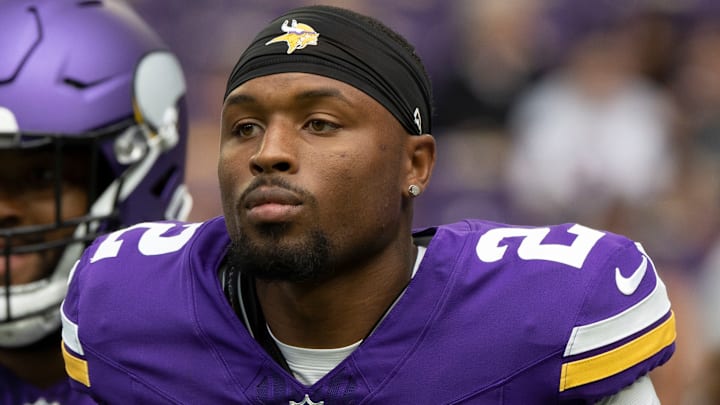
The Fall: From Starter to Sideline Spectator
But as the season progressed, the mirage faded. Rodgers’ production plummeted, with just one defended pass in the ensuing 10 games and zero repeats of those eye-popping stats from Week 3. His coverage skills held up decently, but the cracks showed elsewhere—particularly in tackling. Open-field misses became a glaring weakness, allowing opponents to turn short gains into chunk plays. “He really struggled making tackles in the open field specifically,” Seifert detailed on December 10. “His coverage was OK, but the tackling really struggled.”
Enter the demotion. Over the past two games, Rodgers has been relegated to a hybrid role, primarily entering in nickel packages (five defensive backs) while yielding base defense snaps to Jay Ward. Ward, a versatile defensive back who moonlights as a safety, has stepped up with stronger tackling and run support—qualities Flores prioritizes in his blitz-heavy system. It’s a move no one saw coming, especially after Rodgers’ early-season heroics. But in Flores’ meritocracy, performance trumps potential every time.
This isn’t just a temporary benching; it’s a red flag waving furiously. The Vikings have a history of whiffing on cornerbacks through drafts and free agency, with Byron Murphy Jr. being the rare bright spot amid a sea of slap-singles. Rodgers was meant to change that narrative, but his regression has only amplified the position’s woes.

Jay Ward’s Promotion: A Band-Aid, Not a Cure
While Ward’s ascension provides short-term stability, it’s hardly a long-term fix. “I don’t think Jay Ward projects as a longterm cornerback for this team in future seasons,” Seifert opined, “but you also wonder if Isaiah Rodgers does, either.” Ward’s hybrid background makes him a useful plug-and-play option, but he’s not the elite cover man Minnesota craves opposite Murphy. The Vikings’ secondary remains vulnerable, especially against pass-happy offenses in the NFC North.
Rodgers’ demotion underscores a deeper issue: the $11 million investment isn’t yielding returns. With his contract expiring after next season, the Vikings have little incentive to stick with a player who’s morphed from starter to situational sub. Trade rumors are already swirling, and a release could be on the table if his play doesn’t rebound. In a league where cap space is king, holding onto underperformers is a luxury Minnesota can’t afford—especially with playoff aspirations on the line.
Looking Ahead: Drafting the Future at Cornerback
The writing on the wall couldn’t be clearer: the Vikings are poised to address their cornerback crisis in the 2026 NFL Draft. ESPN’s Field Yates, in his inaugural mock draft released on December 10, projects Minnesota selecting LSU’s Mansoor Delane with the No. 11 overall pick. Delane, a 6-foot, 190-pound standout, is the first corner off the board in Yates’ scenario, trailing only Ohio State safety Caleb Downs (to the Rams at No. 9).
Yates praises Delane’s fit in Flores’ system: “He has excellent size for the position and thrives using force at the catch point to disrupt the ball. Delane is at his best playing off coverage and reading the quarterback, though he is also a willing run defender.” His stats back it up—when targeted as the primary coverage player this season, Delane allowed the third-lowest completion percentage in the FBS at a stingy 27.8%. In a draft class loaded with defensive talent, snagging Delane could finally give the Vikings a cornerstone at the position.
The Inevitable Exit: Time to Move On
Isaiah Rodgers’ story in Minnesota is a classic NFL rollercoaster: a meteoric rise followed by a crashing fall. What began as a savvy free-agent splash has soured into a costly mistake. His demotion to a nickel role isn’t just a tactical tweak—it’s the beginning of the end. With Jay Ward filling the void (albeit temporarily) and the draft offering fresh talent like Delane, Rodgers’ days in a Vikings uniform are numbered.
The franchise can’t afford to linger on “what ifs.” An exit—via trade, release, or mutual parting—feels absolutely inevitable. As the Vikings chase contention in 2025 and beyond, Rodgers will likely be remembered as another swing and miss in their endless quest for secondary stability. Done in Minnesota? You bet. The only question left is how soon the door closes behind him.