Tense Exchange Between Ted Lieu and Pam Bondi During Hearing Sparks Debate Over Epstein Questions
A congressional hearing turned confrontational after Representative
Ted Lieu
and former Florida Attorney General
Pam Bondi
clashed over questions related to the long-running investigation involving
Jeffrey Epstein.
The moment, captured on video and widely shared online, showed how sensitive the topic remains years after the original criminal cases were closed.
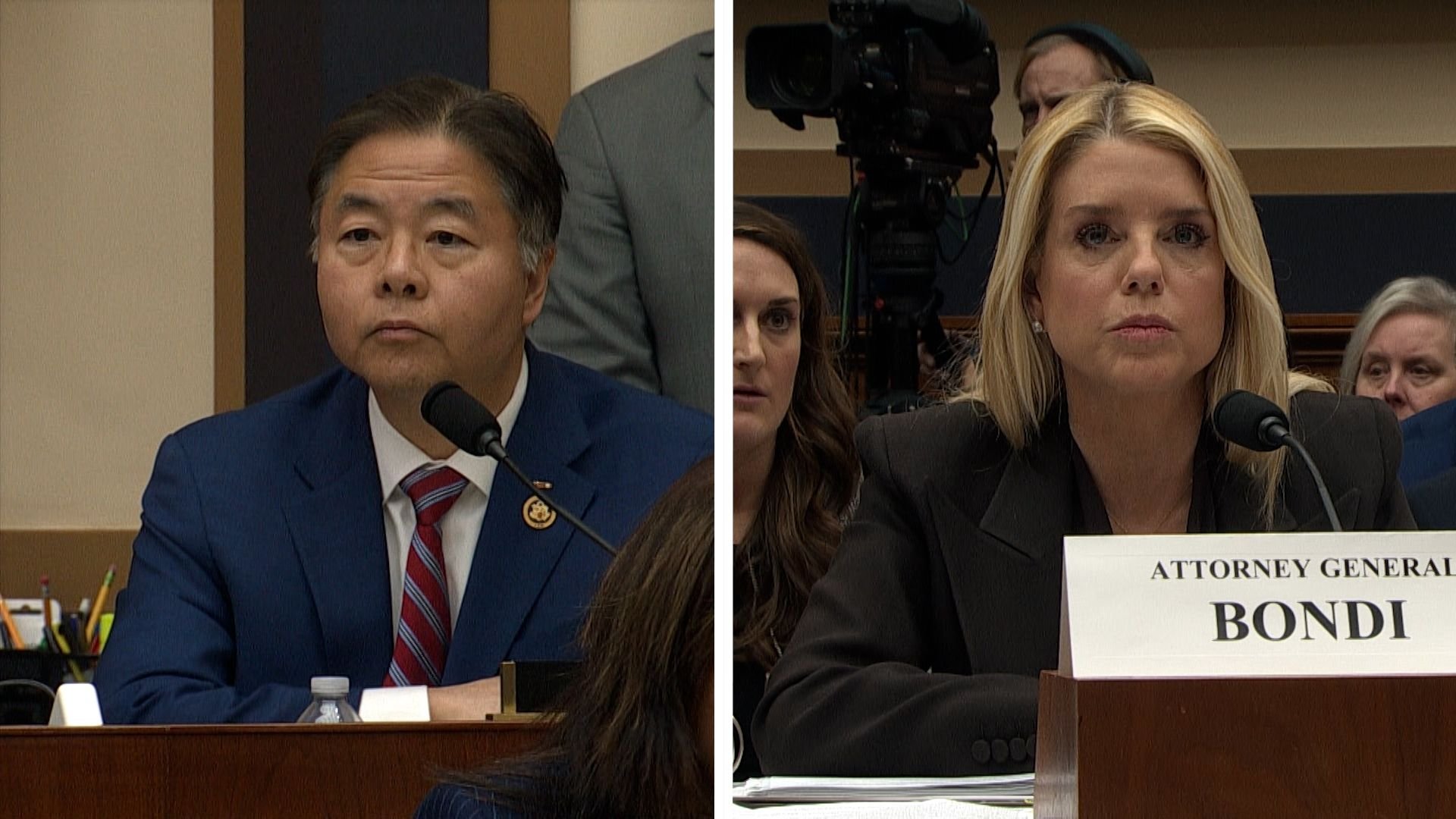
The exchange began when Lieu asked whether any reports involving underage victims had ever been submitted in connection with gatherings linked to Epstein. His questions appeared to focus on whether law-enforcement agencies had received tips or witness statements, even if those claims had not resulted in formal charges. The line of questioning quickly drew attention from other members of the committee as the discussion shifted from general oversight to specific allegations.
Bondi paused before responding, then said the question was misleading and argued that there was no evidence showing that
Donald Trump
had committed any crime in relation to Epstein. She stressed that rumors and unverified reports should not be treated the same as findings from an investigation, and she warned that repeating allegations without proof could create false impressions about people who had never been charged.
Lieu replied that he was not claiming a crime had been proven, but said he wanted to place additional material into the official record. He referred to a witness statement that had reportedly been submitted through a tip line at the
Federal Bureau of Investigation,
arguing that the existence of such a report showed that concerns had at least been raised, even if authorities did not pursue the claim further. He began reading portions of the document aloud, prompting objections from Bondi and several other participants.

As the exchange continued, the tone in the room became noticeably sharper. Bondi objected to the suggestion that she had misled the committee, raising her voice and insisting that the document being discussed did not prove wrongdoing. Lieu continued to read from the statement, while other members began speaking at the same time, making it difficult for the chair to keep the hearing in order.
Observers noted that moments like this are not unusual in high-profile hearings, especially when the subject involves a case as widely known as Epstein’s. The financier was arrested in 2019 on federal charges related to sex trafficking of minors, but died in jail before trial, leaving many questions unresolved. Because of the case’s connections to wealthy and politically connected individuals, hearings that touch on the topic often become contentious.
Legal experts say the dispute highlighted an important distinction between allegations and evidence. Tips sent to investigators, including those submitted to FBI hotlines, do not necessarily mean a crime occurred. Agencies routinely receive thousands of reports, many of which are never confirmed. For that reason, officials are careful about how such material is discussed in public proceedings.
The clip spread quickly on social media, where viewers argued over what the exchange actually showed. Some said Lieu was right to put the document on record so that all claims could be reviewed, while others agreed with Bondi that repeating unproven accusations in a public hearing could be unfair. Without the full context of the hearing, short video segments led to different interpretations about what had happened.
Congressional aides later noted that documents entered into the record during a hearing do not automatically change the legal status of a case. They become part of the official transcript, but investigators and courts still rely on verified evidence rather than statements alone when determining whether any law was broken.
The incident underscores how the Epstein case continues to surface in political debates years after the original charges. Even brief references during hearings can generate strong reactions, reflecting the public’s ongoing interest in whether all aspects of the investigation were fully examined.
For now, the exchange between Lieu and Bondi appears to have produced more argument than new facts. Still, the tense moment shows how quickly discussions about Epstein can escalate, turning routine oversight hearings into headline-making confrontations watched far beyond the committee room.