A video circulating online claims that former U.S. president
Donald Trump
joked about his predecessor while giving Japanese Prime Minister
Sanae Takaichi
a tour at the White House, sparking debate about political humor, diplomacy, and the accuracy of viral political content. Supporters described the moment as a playful jab at former president
Joe Biden,
while critics questioned whether the scene happened as described.
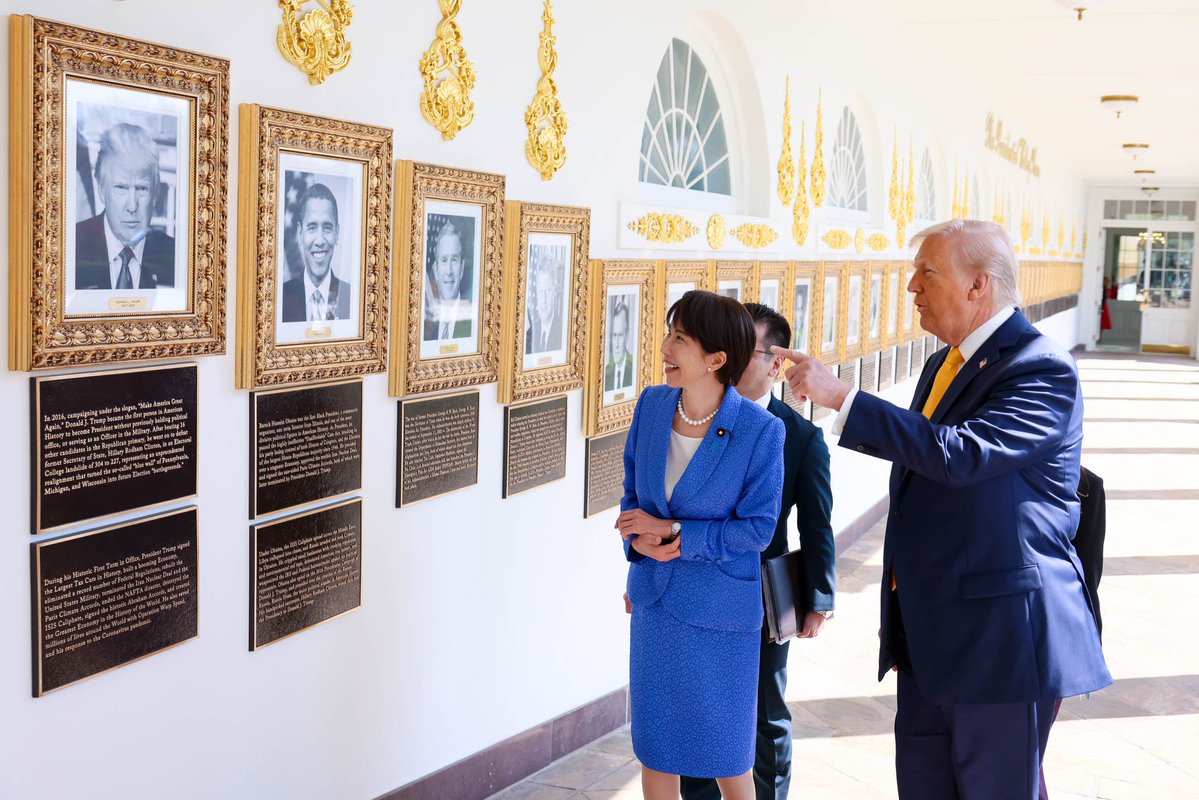
According to posts shared widely on social media, Trump guided the visiting leader along what was described as a “Presidential Walk of Fame,” an outdoor display said to feature portraits of past presidents. The clip allegedly shows the two stopping at Biden’s spot, where instead of a traditional photograph there appears to be an image of an autopen signing his name, prompting laughter from those present.
Despite the strong reaction online, there is no confirmed record from official White House releases or major news organizations showing that such an installation exists or that the encounter took place in the way described. The White House has not announced the creation of a permanent outdoor presidential display matching the one shown in the viral posts, and no official transcript from the visit mentions the exchange.
The reference to an autopen relates to a device commonly used by U.S. presidents and other officials to reproduce signatures on large numbers of documents. The tool has been used for decades by administrations of both parties, primarily for routine paperwork, though it has occasionally become the subject of political criticism. Legal experts have generally agreed that the use of an autopen for certain official purposes is allowed, provided the president authorizes it.

Online commentators who shared the clip portrayed the moment as an example of Trump’s style of humor, which often includes sharp remarks about political rivals. During his public career, he frequently used jokes or sarcasm to criticize opponents, a strategy that supporters say makes him appear direct and unscripted, while opponents argue it can blur the line between entertainment and diplomacy.
Diplomatic analysts note that meetings between national leaders are usually carefully planned, and public appearances are often choreographed to avoid misunderstandings. Because of that, unexpected moments in viral videos are sometimes taken out of context or edited in ways that make them appear more dramatic than they were in reality.
The reaction also reflects the continuing political divide surrounding Biden’s presidency. Critics have long argued that his administration relied heavily on advisers, while supporters say those claims exaggerate normal government procedures. The autopen has become a symbol in that debate, even though its use is not unique to any single president.
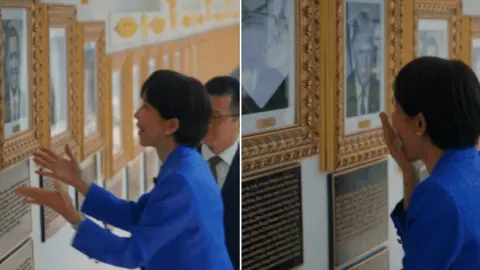
Experts who study misinformation say short clips can spread quickly when they combine humor with political rivalry, especially when they appear to show foreign leaders reacting to domestic controversies. Without full context, viewers may assume the event was official even if it was informal, edited, or entirely fictional.
For now, the available evidence suggests that the story about the tour and the autopen portrait cannot be verified as described, though the video continues to circulate widely online. The episode illustrates how easily political satire, real footage, and commentary can blend together, creating moments that feel authentic even when the details remain uncertain.
Whether the scene was staged, misinterpreted, or exaggerated, the strong reaction shows how political humor remains a powerful tool in modern media. In an era when diplomacy, entertainment, and social media often overlap, even a brief clip can become a global talking point — especially when it involves current leaders, former presidents, and the ongoing debate over their legacies.