The Long War: Rosie O’Donnell and the Architecture of Presidential Rage
The feud between Donald Trump and Rosie O’Donnell has transitioned from a staple of mid-2000s tabloid fodder into a high-stakes constitutional proxy war. What began as a disagreement over a beauty pageant decades ago has culminated in 2025 with the President of the United States publicly weighing the revocation of a private citizen’s birthright. The escalation, triggered by a series of raw, unscripted social media dispatches from O’Donnell, has moved beyond personal animosity into a chilling debate over the limits of executive power and the mental fitness of the Commander-in-Chief.

The Threat of “Exile”
The latest flashpoint ignited when President Trump took to Truth Social to announce he was giving “serious consideration” to revoking O’Donnell’s U.S. citizenship, labeling the comedian a “threat to humanity” and suggesting her ancestral Ireland “could have her.” The statement sent legal scholars into a frenzied defense of the 14th Amendment, which explicitly protects the citizenship of anyone born on American soil.
“This is not a monarchy,” noted political commentator Ana Navarro during a heated segment on The View. Legal experts were quick to clarify that a president possesses no unilateral authority to strip a natural-born citizen of their status, regardless of their online rhetoric. Yet, the gravity of the threat—issued from the most powerful office on earth against a comedian for the “crime” of criticism—has signaled a new, more volatile era of presidential retaliation.
The “Willful Blindness” of the Medical Record
O’Donnell’s recent surge in influence stems from a ten-minute, filter-free TikTok video that bypassed the traditional media apparatus. In it, she moved past political talking points to offer a grim clinical observation of the President’s behavior. Citing patterns she recognized from her own family’s struggles with illness, O’Donnell alleged that the President is suffering from “frontotemporal lobe dementia” and “congestive heart failure.”
“No one is making up the way he stands. No one is making up the way his brain is malfunctioning,” O’Donnell asserted, accusing the mainstream media of “willful blindness.” She pointed to a recent six-day period where the President vanished from public view, remaining silent even as major court rulings—which typically would have triggered a social media firestorm—were handed down. To O’Donnell, this silence was not a sign of restraint, but of a man “seriously ill” and “incapacitated.”
A Twenty-Year Pattern of Intimidation
The enduring nature of the Trump-O’Donnell conflict provides a unique longitudinal study of the President’s tactics. For twenty years, the President has threatened O’Donnell with lawsuits that were never filed and legal actions that never materialized. Analysts suggest that this pattern of “all bark and no bite” has shifted from an intimidation tactic into a form of public confession.
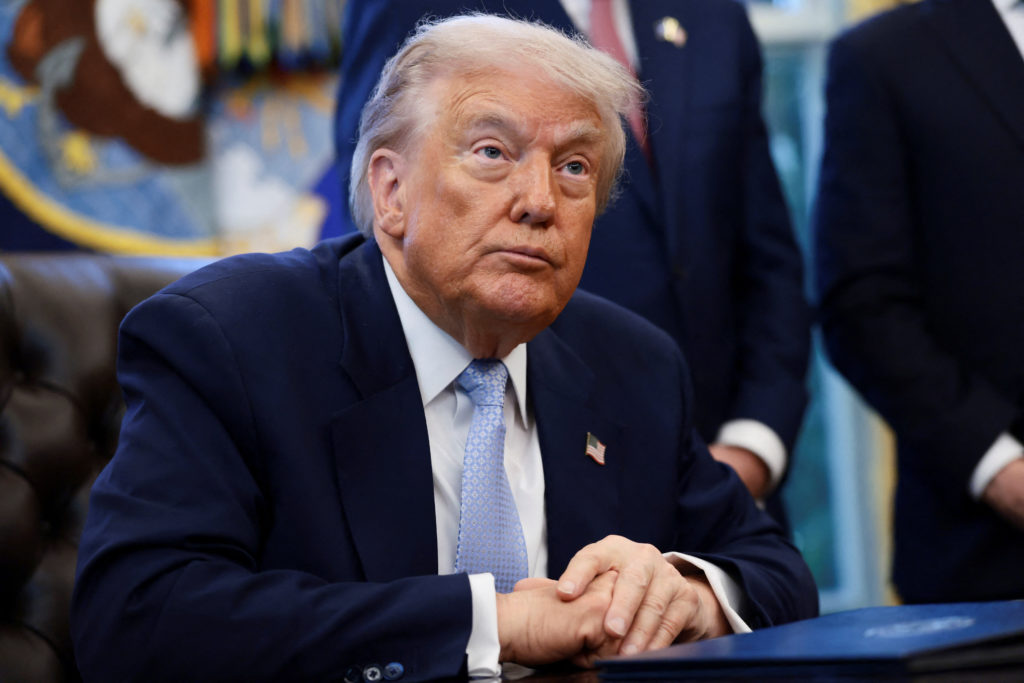
O’Donnell argued that the President’s inability to ignore her—even at midnight with the nuclear codes at his disposal—reveals a fundamental lack of the “empathy” required for the office. “I don’t even think he cares about his own family,” she claimed, framing the President as a man who confuses attention with respect and fear with loyalty. The fact that the leader of the free world feels compelled to respond within hours to a comedian’s TikTok suggests, to his critics, a presidency that is reactive rather than strategic.
The Insurrection Act and the Streets
The rhetoric has coincided with a physical escalation in American cities. As the administration invokes the Insurrection Act and deploys troops into domestic centers, the stakes of the “silencing campaign” have become literal. In Minneapolis, tens of thousands of citizens—including clergy, teachers, and teenagers—braved -22° weather to protest what they perceive as a slide toward autocracy.
O’Donnell has positioned herself as a catalyst for this dissent, questioning why more people are not “upset” by the deployment of the National Guard against protesters. She linked the administration’s domestic policy to a broader “villainy” that she claims will eventually lead to the collapse of the country if left unchallenged. “You acquiesce to this kind of a villain and the country is over,” she warned, urging every citizen to challenge the President’s narrative with “facts” rather than nicknames.
The Regenerating Narrative
O’Donnell also touched upon a topic that remains a sensitive point for the administration: the assassination attempt and the President’s subsequent recovery. She questioned the “miraculous regeneration” of his ear, asking why the news media refuses to discuss the details of the event without “couching” their language.
By questioning the official account of the President’s physical health and the specifics of the July 13th event, O’Donnell has hit a nerve that consistently triggers a White House counter-response. Her refusal to “shut up” has made her a target for deportation threats, but it has also made her a symbol of the “clear voices” emerging from outside the political establishment.
The 24-Month Horizon
As the nation looks toward the next two years, the question is no longer whether O’Donnell is “right,” but whether the constitutional guardrails she highlighted will hold. The President’s threats to revoke citizenship and silence critics have clarified the stakes for a public increasingly wary of executive overreach.
For O’Donnell, the battle is not about insults, but about “shaming him for who he is and what he is with facts.” As the President’s legal walls close in and the Epstein files continue to loom in the background, the “Long Island comedian who refused to shut up” has become a central figure in a drama that may well decide the future of the American experiment. The question she leaves for the public is a haunting one: “Why are you not upset?”