The Minnesota Vikings may have quietly received a dose of unexpected optimism in an offseason filled with quarterback uncertainty. As the franchise continues to build around rookie quarterback J.J. McCarthy, new developments around Aaron Rodgers have reopened a conversation that once felt unrealistic — and now feels increasingly plausible.
The Vikings’ long-term vision remains clear: McCarthy is the future. But the NFL rarely allows teams the luxury of clean timelines, especially at quarterback. Development curves are unpredictable, injuries linger longer than expected, and competitive windows don’t pause. That’s why recent “good news” surrounding Rodgers’ situation has resonated inside league circles. It’s not about replacing the plan — it’s about protecting it.
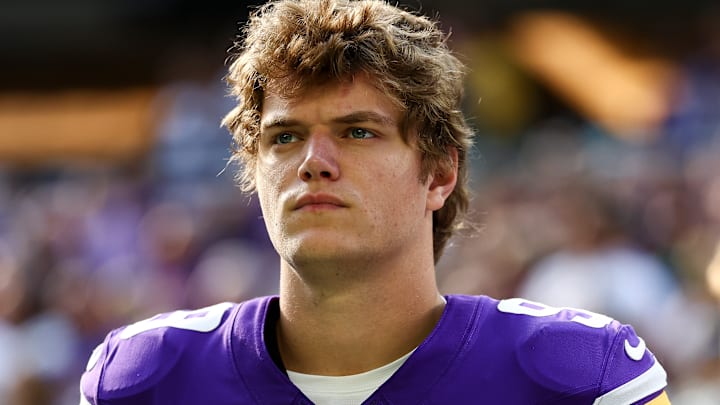
Rodgers, still technically tied to the New York Jets, has become the center of renewed speculation as questions swirl about his health, motivation, and long-term commitment. Reports suggesting clarity — or at least movement — regarding his future have sparked intrigue in Minnesota, where the Vikings are keenly aware that relying exclusively on a rookie quarterback carries risk, no matter how promising the talent.
From a strategic standpoint, Rodgers represents the rarest of options: an elite, experienced quarterback who could step in immediately without altering the franchise’s long-term trajectory. Unlike a full rebuild or a desperation trade, a Rodgers bridge scenario would be about stability, not control. It would buy time — for McCarthy to develop, for the coaching staff to evaluate progress, and for the roster to remain competitive in a tough NFC landscape.
What makes this scenario compelling is fit. Head coach Kevin O’Connell’s offense is built on timing, intelligence, and adaptability — traits that have defined Rodgers’ career. While age and injury history are legitimate concerns, the upside is obvious: a quarterback who can still command defenses, elevate receivers, and keep a playoff-caliber roster afloat.
Crucially, this isn’t about panic. The Vikings are not backing away from McCarthy. In fact, the interest in Rodgers — even at a conceptual level — underscores how committed Minnesota is to doing right by its young quarterback. Rushing a rookie before he’s fully ready can derail development. Having a proven veteran option prevents that pressure from becoming destructive.
There’s also a locker-room dimension. Rodgers’ presence, even temporarily, would reshape expectations and accountability. Young players learn quickly when a future Hall of Famer is under center. For McCarthy, the opportunity to learn without being forced to carry the franchise immediately could prove invaluable.
Of course, nothing is guaranteed. Financials, health evaluations, and Rodgers’ own preferences will dictate what’s realistic. But the mere fact that the Vikings can plausibly view Rodgers as a contingency — rather than a fantasy — is the “good news” here. It means Minnesota has options, leverage, and flexibility at the most important position in sports.
In an NFL defined by uncertainty, that alone is a win.