The Houston Texans are no longer a feel-good rebuilding story, and the franchise has officially entered a ruthless phase where comfort is replaced by expectation, and loyalty is sacrificed for long-term ambition.
Every successful NFL team eventually reaches a moment when tough decisions outweigh emotional attachments, and for Houston, that moment is rapidly approaching as the 2026 season looms closer.
What once felt like patience and progress will soon transform into pressure, accountability, and zero tolerance for underperformance, regardless of past contributions or fan favoritism.
The Texans front office understands that sustained success demands constant evolution, and that evolution often begins with removing familiar names that no longer align with the future vision.
These upcoming departures will shock parts of the fanbase, ignite endless debates on social media, and dominate sports radio conversations throughout Texas and beyond.
The following five players represent not just potential roster cuts, but symbolic endings to specific chapters in the Texans’ modern history.
1.Stefon Diggs Is the Star Houston Wanted, But Not the Star They Can Keep
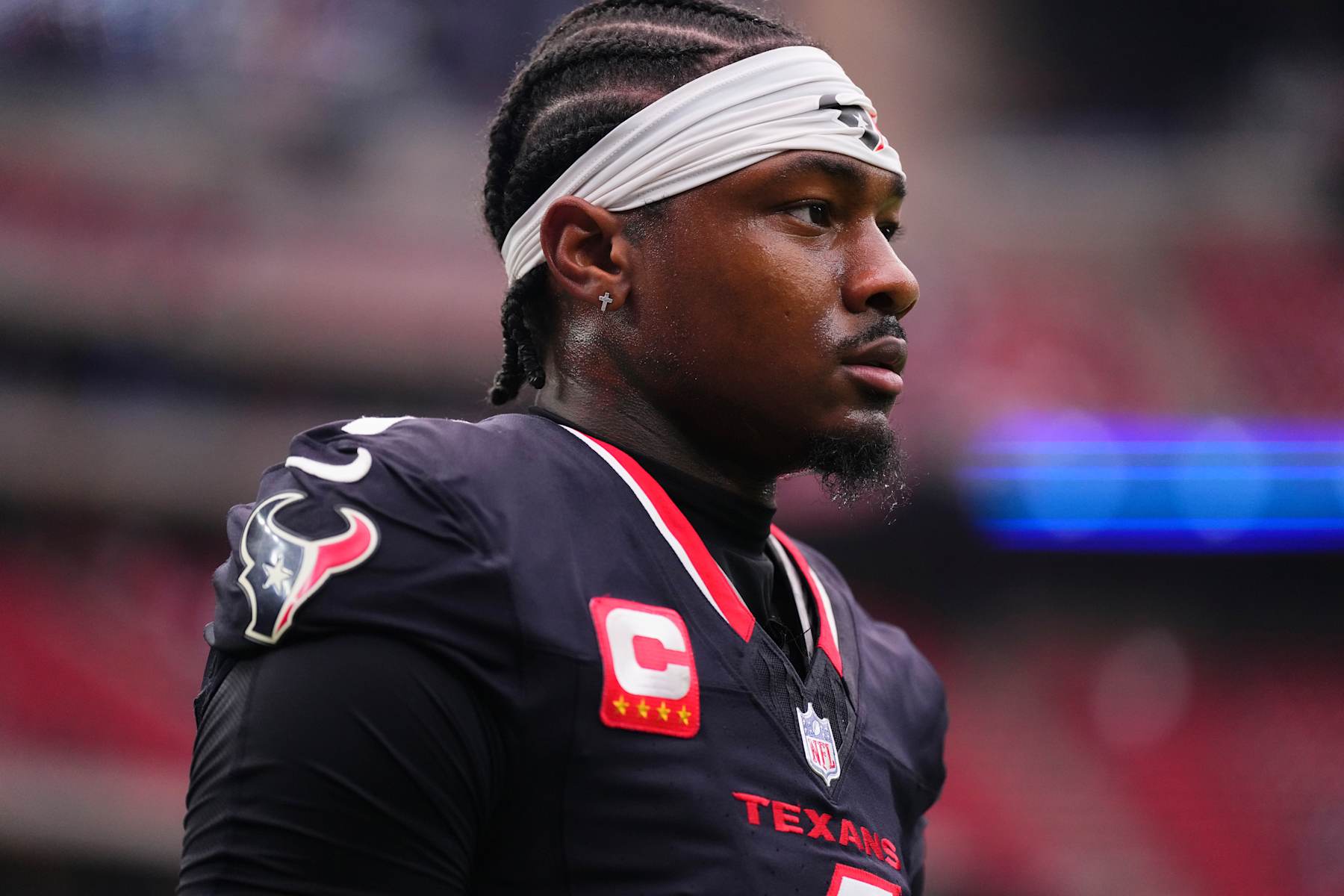
Stefon Diggs arrived in Houston surrounded by massive expectations, national headlines, and the belief that his elite route-running could immediately elevate the Texans offense into the league’s upper tier.
His resume demanded respect, yet his past also carried warnings about chemistry, patience, and emotional volatility when circumstances failed to meet his personal standards.
In the early stages, Diggs delivered flashes of brilliance that reminded fans exactly why Houston took the risk despite widespread skepticism across the league.
However, as seasons progress, production is only part of the evaluation, while attitude, adaptability, and willingness to embrace evolving roles become equally important.
By 2026, Diggs’ contract will loom larger than his box-score impact, forcing Houston to question whether financial commitment matches overall value.
The Texans offense is clearly moving toward balance, emphasizing versatility over reliance on one dominant personality demanding consistent attention.
Diggs thrives in systems where he feels central to the narrative, but Houston’s future depends on distributing responsibility rather than feeding a single star.
Once younger receivers begin demanding extensions and expanded roles, Diggs becomes a luxury rather than a necessity.
Fans will argue his competitiveness is misunderstood, while critics will point to recurring locker-room tension across multiple franchises.
In the end, the Texans will likely choose harmony, flexibility, and youth over prolonging a partnership that feels destined to fracture.
2.Laremy Tunsil’s Talent Is Undeniable, But His Contract Is Unforgiving
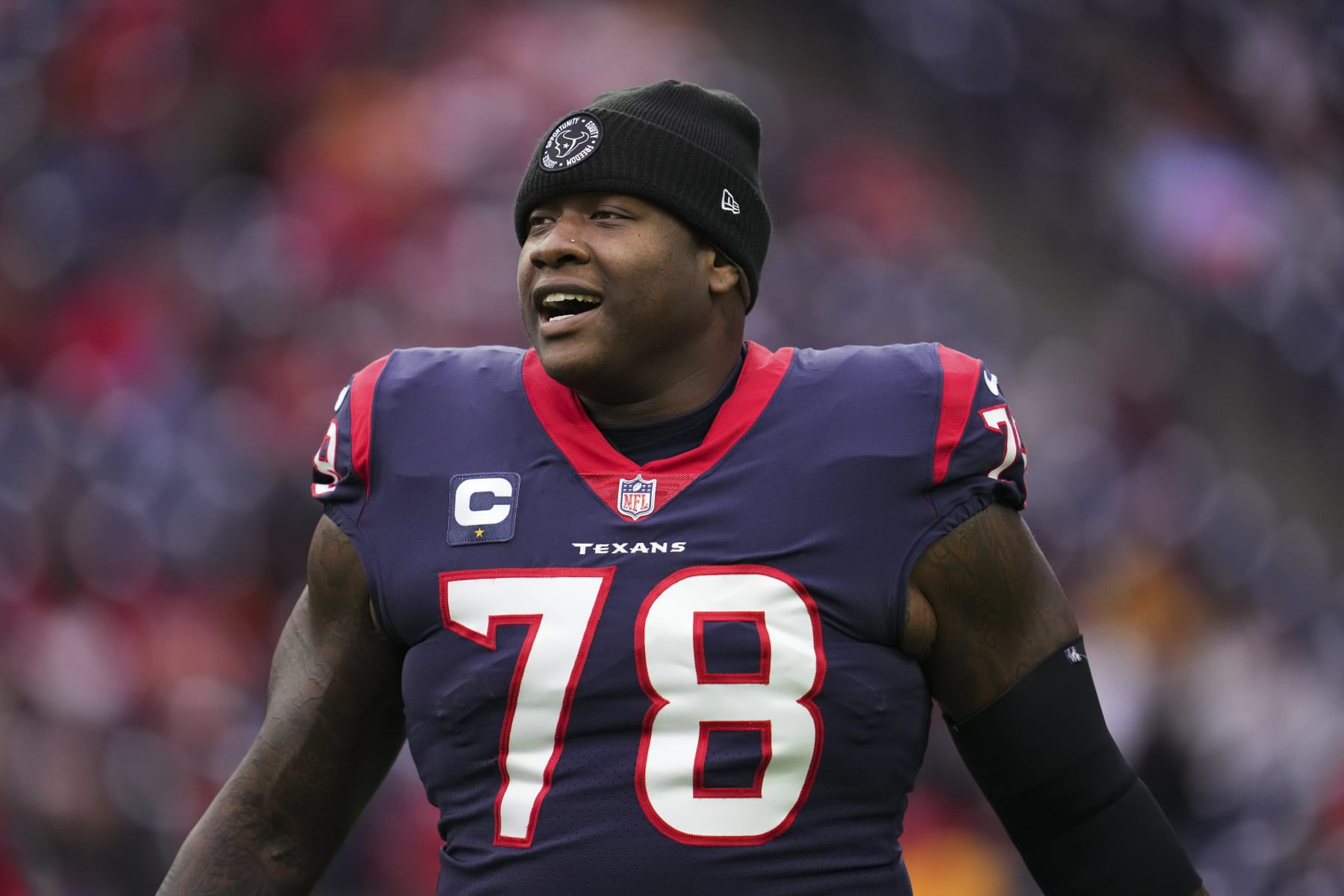
Laremy Tunsil has been one of the most consistently elite players on Houston’s roster, providing stability at a position that often defines offensive success.
Protecting the quarterback’s blind side is invaluable, yet the NFL salary cap forces teams to evaluate cost versus impact with brutal honesty.
By 2026, Tunsil’s contract will represent one of the most significant financial commitments on the team, limiting flexibility elsewhere.
The Texans will soon face critical decisions involving younger stars who demand extensions and cap space to remain competitive.
Even great players become expendable when their price prevents roster balance.
Houston’s front office understands that offensive line depth can be rebuilt through smart drafting and development rather than record-breaking contracts.
Fans may view moving on from Tunsil as reckless, but history proves championship teams often replace expensive veterans sooner than expected.
Age, durability concerns, and the physical toll of the position all factor into long-term planning.
The Texans will not question Tunsil’s ability, but they will question sustainability.
When that question outweighs sentiment, the decision becomes inevitable.
3.Robert Woods Represents Leadership, But Leadership Alone Cannot Save a Roster Spot

Robert Woods joined the Texans as a respected veteran presence, valued as much for his professionalism as his on-field production.
In a young locker room, Woods provided stability and accountability during a transitional period.
Yet the NFL is not built on gratitude, and leadership without explosive production quickly becomes a financial liability.
By 2026, Houston’s receiving corps will likely feature younger, faster, and cheaper options demanding opportunities.
Woods’ skill set, while reliable, does not align with the league’s accelerating pace and emphasis on separation and yards after catch.
Teams routinely praise veterans publicly before quietly moving on behind closed doors.
This departure will be polite, respectful, and largely overlooked nationally.
However, it will mark another step toward a fully rebranded Texans offense.
Fans may lament losing a locker-room glue guy, but franchises rarely pay premiums for intangibles alone.
Woods’ exit will feel inevitable rather than controversial.
4.Sheldon Rankins Is a Solid Contributor in a League That Demands More Than Solid
Sheldon Rankins has provided interior defensive help when healthy, offering experience and occasional disruption against the run and pass.
Unfortunately, availability and consistency remain persistent concerns throughout his tenure.
Houston’s defensive philosophy is shifting toward speed, versatility, and relentless pressure across multiple positions.
Rankins’ rotational usage limits his impact within that vision.
By 2026, younger defensive linemen will likely surpass him in snap count and influence.
In a salary-cap-driven league, solid veterans often lose jobs to cheaper, ascending talent.
Rankins’ departure will not generate outrage, but it will quietly reflect Houston’s commitment to modernization.
Fans rarely notice defensive line changes until pressure disappears.
The Texans are betting that youth will provide more long-term upside.
That bet makes Rankins expendable.
5.Ka’imi Fairbairn’s Position Is Secure Until It Suddenly Isn’t

Kickers live on borrowed time, regardless of tenure or past reliability.
Ka’imi Fairbairn has delivered stability, yet inconsistency during critical moments raises unavoidable questions.
In the NFL, one missed kick can define an entire season.
Houston’s front office will eventually explore alternatives that offer similar production at lower cost.
Special teams decisions rarely inspire headlines, but they often reflect ruthless efficiency.
By 2026, Fairbairn may find himself replaced by a younger, cheaper competitor.
Fans will debate loyalty versus results, especially after years of service.
Executives will focus solely on probability and margins.
Comfort is never prioritized over potential improvement.
Fairbairn’s exit would be quiet but telling.
Why These Departures Matter More Than Fans Realize
This roster purge is not about individual failures, but about organizational evolution.
The Texans are transitioning from hopeful rebuilders to legitimate contenders with expectations attached.
That transition requires eliminating inefficiencies at every level.
Fans often confuse loyalty with success, but history rarely supports that belief.
Every championship team has made unpopular decisions.
Houston is preparing to do the same.
The backlash will be loud.
The debates will be relentless.
Yet winning eventually silences criticism.
The Texans understand this truth better than ever.
The Final Reality Texans Fans Must Accept
The Houston Texans of 2026 will look dramatically different from the team fans recognize today.
Jerseys will disappear from the stands.
Familiar names will become memories.
Anger will flood comment sections.
But progress rarely feels comfortable.
The Texans are choosing the future over familiarity.
That choice will define the franchise for years.
Love it or hate it, change is coming.
And it is absolutely unavoidable.