The Minnesota Vikings delivered one of their most complete performances of the season, overpowering the Green Bay Packers with a punishing ground game to secure a decisive 16–3 victory that sent a clear message across the NFC.
From the opening drive at U.S. Bank Stadium, Minnesota made its intentions unmistakably clear. This would not be a finesse battle. This would be about control, physicality, and dominance in the trenches—and the Vikings executed that plan to near perfection.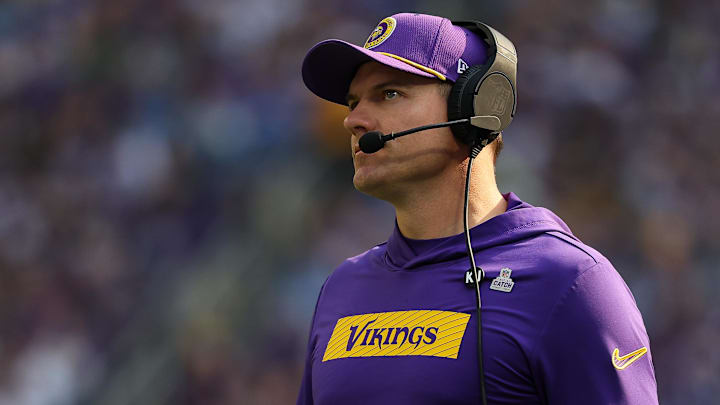
Facing a Packers team that entered the matchup with playoff momentum and national attention, Minnesota flipped the script by leaning heavily on its rushing attack. The Vikings consistently attacked the heart of Green Bay’s defense, churning out tough yards and wearing down a unit that never found its footing.
Instead of forcing explosive plays through the air, the Vikings trusted their offensive line and backs to dictate the tempo. Long, grinding drives drained the clock and kept Green Bay’s offense stranded on the sideline. By halftime, the tone had been set: Minnesota was going to win this game on its own terms.
The Packers struggled to adjust. Time and again, Vikings runners slipped through first contact, turning modest gains into momentum-shifting plays. By the fourth quarter, Green Bay’s defensive front looked exhausted, hands on hips as Minnesota continued to lean on the run.
What made the victory even more impressive was Minnesota’s discipline. The Vikings avoided costly turnovers, committed minimal penalties, and executed with patience. Every possession felt intentional. Every yard mattered.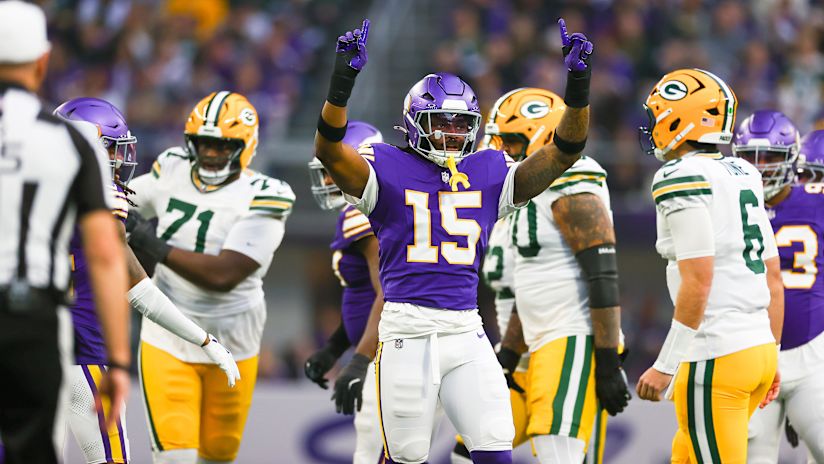
Defensively, the Vikings matched that physical approach with relentless pressure and sound tackling. Green Bay never established rhythm, particularly on early downs, where Minnesota’s run defense consistently forced the Packers into uncomfortable third-and-long situations.
The Packers’ offense, known for its balance and explosiveness, was reduced to short gains and stalled drives. Minnesota’s defensive front collapsed pockets, sealed edges, and closed running lanes before they could develop. By the end of the night, Green Bay had managed just a single field goal—far below expectations for one of the league’s more dangerous offenses.
Perhaps the most telling statistic wasn’t on the scoreboard, but on the time-of-possession chart. Minnesota controlled the clock, suffocating the game and refusing to give Green Bay any chance to build momentum. It was old-school football, executed with modern precision.
In the locker room afterward, the mood reflected pride rather than surprise. Players spoke about preparation, trust, and belief—belief in a system that emphasized toughness over flash.
“This was about us,” one Vikings lineman said. “About proving we can play physical football against anyone.”
For the Packers, the loss served as a wake-up call. While playoff positioning may already be secure, the performance exposed vulnerabilities—particularly against teams willing to challenge them at the line of scrimmage.
For Minnesota, the victory was far more than a single win. It was a statement. A reminder that the Vikings are capable of imposing their will, even against elite competition. A signal to the rest of the league that they are not simply rebuilding or surviving—but evolving.
The final score read 16–3, but the impact of the game echoed far beyond the numbers. This was football stripped to its core: strength, execution, and belief.
And on this night, the Vikings ran their way into relevance.