On paper, the Minnesota Vikings’ season ends with a number that looks harmless, even respectable: 8–8. In reality, it feels like a verdict. No playoff berth. No momentum. No clear identity. And now, no hiding place.
When owner Mark Wilf confidently says that “change is exciting,” it may sound like optimism from the top. But inside the building — and across a frustrated fanbase — that excitement echoes more like a funeral bell. For general manager Kwesi Adofo-Mensah and head coach Kevin O’Connell, this isn’t the promise of a new beginning. It’s the sound of accountability finally knocking.
The Vikings were never supposed to be here. Entering the season, the narrative was clear: resilience, culture, grit. This was the era of process over panic, of patience over impulsive rebuilds. The franchise sold belief — belief in smart analytics, steady leadership, and a locker room that would fight regardless of circumstance. Instead, what Minnesota delivered was mediocrity dressed up as progress.
An 8–8 record tells a familiar story. Competitive, but not threatening. Functional, but not feared. The Vikings didn’t collapse dramatically, but they didn’t rise either. They hovered. And hovering, in the NFL, is often worse than failing outright. It leaves a franchise stuck between hope and reality, unable to fully rebuild and incapable of truly contending.
That’s where the so-called “Grit” era comes under scrutiny. Grit is an appealing word. It suggests toughness, perseverance, and character. But grit without results becomes a slogan, not a strategy. At some point, culture has to translate into wins that matter. December football that means something. January football that exists at all.
Instead, Minnesota once again watched the postseason from home.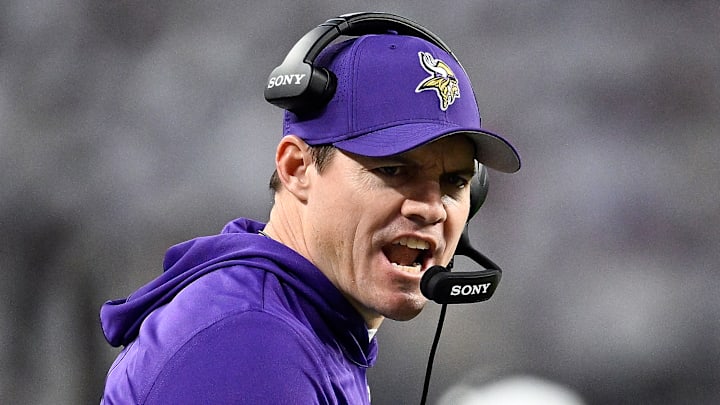
For Adofo-Mensah, this season raises uncomfortable questions. The roster construction remains oddly balanced between “win now” and “wait and see.” Draft capital hasn’t yet produced transformative stars, and free-agency bets have been cautious to the point of invisibility. Smart cap management means little if it leads to perpetual middle ground.
Kevin O’Connell, meanwhile, faces his own reckoning. Praised for leadership and locker-room presence, he has yet to prove he can consistently outcoach top competition when it matters most. Close losses, conservative decisions, and offensive stagnation at key moments have become recurring themes. Culture can buy time. Results determine how much.
This is why the word “purge” has entered the conversation. Not necessarily a reckless teardown, but a philosophical one. The Vikings must decide who they actually are. Are they building patiently toward a future contender, or are they clinging to an image of competitiveness that no longer reflects reality?
Fans are no longer asking for promises. They’re asking for direction.
If “change is exciting,” then prove it. Make the hard choices. Stop selling grit as an outcome instead of a foundation. Stop confusing stability with success. In a league built on urgency, the Vikings are running out of explanations.
The most dangerous thing for a franchise isn’t failure — it’s comfort in failure. An 8–8 season with no playoffs should not be treated as acceptable collateral damage in a long-term plan. It should be treated as a warning.
Because if this really is the end of the “Grit” era in Minnesota, then the next era has to be about something far less poetic — and far more honest.
Winning.