The final score read 13–12, but the numbers barely captured the reality of what unfolded inside the stadium.
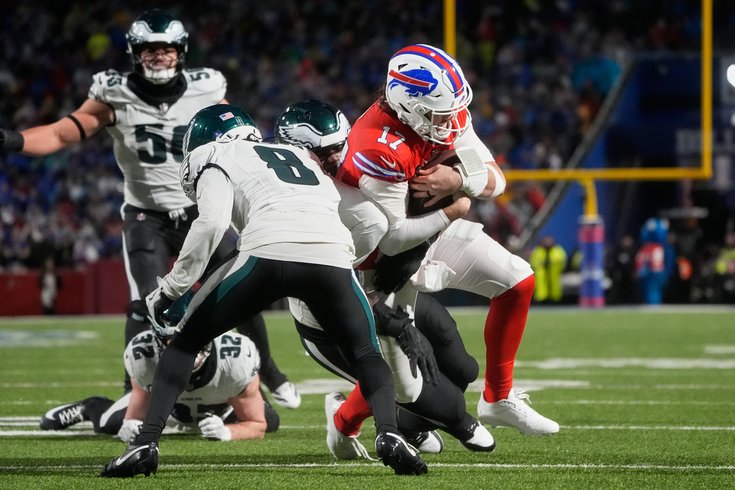
For three hours, the Philadelphia Eagles and Buffalo Bills traded blows in a tense, grinding battle that felt more like a postseason chess match than a regular-season game. Defense ruled. Margin for error disappeared. Every snap carried weight.
When the clock finally hit zero, the Eagles had escaped with a narrow victory — one that sent relief through the crowd as much as celebration. From the stands, the final minutes looked controlled. Calm. Methodical.
That perception changed hours later.
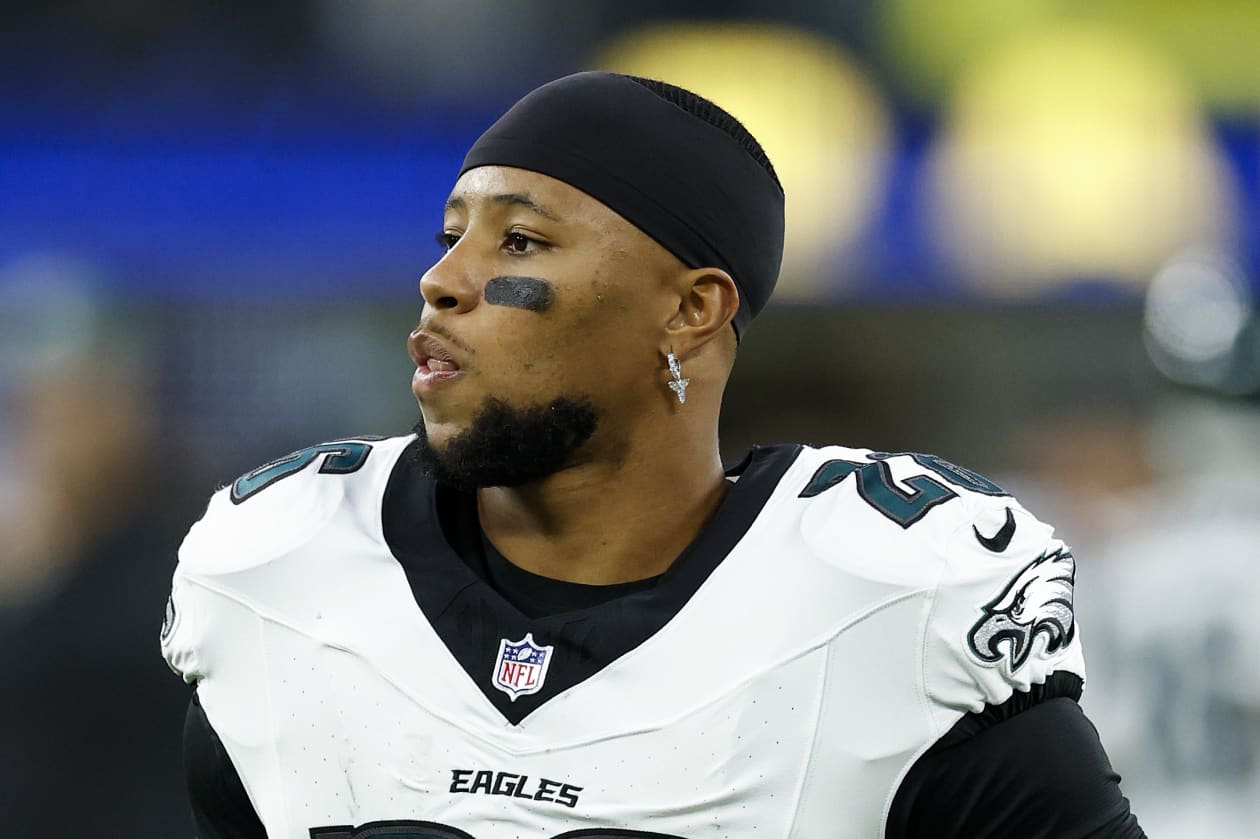
Speaking after the game, Saquon Barkley pulled back the curtain on what really happened in the closing moments of the fourth quarter — revealing a stretch of football defined not by calm, but by urgency, split-second decisions, and adjustments made under extreme pressure.
What fans thought they saw was only part of the story.
A Game Balanced on a Razor’s Edge
With the score tight and time bleeding away, both teams understood the stakes. One mistake could flip the outcome. One missed assignment could undo sixty minutes of work.
From the outside, the Eagles appeared composed. They huddled efficiently. The play clock was managed. The offense moved deliberately.
Inside the huddle, according to Barkley, it was anything but settled.
“There was tension,” Barkley admitted. “Every single play felt like it could be the last chance.”
The Bills’ defense had adjusted, disguising looks and compressing space. Running lanes that had been available earlier were suddenly gone. Passing windows tightened. Communication had to be perfect.
“There were things changing at the line that people couldn’t see,” Barkley said. “We were making decisions on the fly.”
The Adjustments No One Noticed
Barkley explained that what looked like conservative play-calling was actually calculated survival. The Eagles weren’t trying to dominate the final minutes — they were trying to outlast them.
Plays were checked at the line. Protections were altered. Routes were adjusted mid-drive based on subtle defensive shifts.
“We had to stay flexible,” Barkley said. “What we called in the huddle wasn’t always what we ran.”
That level of adjustment requires trust — in the quarterback, in the offensive line, and in the preparation built over weeks. One miscommunication would have opened the door for Buffalo.
The Pressure of Knowing What Was at Stake
Perhaps the most revealing part of Barkley’s comments was how aware the players were of the consequences.
This wasn’t just about closing out a win. It was about momentum. About credibility. About proving they could handle tight games against elite opponents.
“You could feel it,” Barkley said. “Everyone knew how thin the margin was.”
On the sideline, coaches were calm outwardly — but urgency pulsed underneath. Defensive personnel rotated carefully. Timeouts were guarded. Every decision carried risk.
What fans saw as confidence was actually discipline under stress.
The Moment That Nearly Changed Everything
Barkley hinted that one late sequence almost unraveled.
“There was a moment where we had to adjust fast,” he said, choosing his words carefully. “If we don’t handle that right, the outcome’s different.”
The specifics remained private, but the implication was clear: one breakdown could have handed the Bills a late opportunity.
Instead, the Eagles executed just enough — not cleanly, not comfortably, but effectively.
Defense Holding the Final Line
As much as Barkley’s comments focused on offense, he was quick to acknowledge the defense’s role in sealing the escape.
“They had our back,” he said. “We knew if we did our job, they’d finish it.”
The Eagles’ defense bent under pressure but never broke, forcing Buffalo to earn every inch. In a game where points were scarce, discipline mattered more than dominance.
Why the Calm Looked Deceptive
From the stands and on television, the Eagles appeared steady. There were no visible arguments. No frantic gestures. No obvious panic.
That was by design.
Veteran teams understand that chaos spreads quickly. Calm, even when manufactured, keeps mistakes from multiplying.
“We talk about that all the time,” Barkley explained. “You don’t show stress, even when you feel it.”
Inside the helmets, heart rates spiked. Inside the huddle, voices tightened. But outwardly, the Eagles projected control — a skill as valuable as any play in games like this.

A Narrow Escape That Revealed Growth
The 13–12 final won’t be remembered as an offensive showcase. It will be remembered as a survival test.
For the Eagles, that matters.
Close games expose teams. They reveal communication gaps, leadership habits, and emotional resilience. In that sense, this win carried more weight than a blowout ever could.
Barkley’s comments reframed the night not as a lucky escape, but as a lesson in execution under pressure.
“It wasn’t pretty,” he said. “But it was earned.”
How Fans Are Seeing the Game Differently Now
Since Barkley’s remarks surfaced, the reaction has shifted. Fans who initially criticized conservative play-calling or questioned late-game decisions began reassessing what they saw.
What looked passive was actually adaptive.
What looked calm was tightly controlled tension.
What looked simple was anything but.
Understanding the unseen complexity of those final minutes has added depth to a win that once felt merely narrow.
Final Thought: Sometimes Survival Is the Statement
The Eagles didn’t overpower the Bills.
They outlasted them.
In a game where perfection was impossible, discipline and trust became the deciding factors. Saquon Barkley’s revelations pulled fans closer to the reality of NFL football — where the most important moments often happen in silence, between snaps, hidden behind helmets.
The scoreboard said 13–12.
But the story behind that number tells a much richer truth: sometimes, the strongest teams aren’t the ones that look dominant — they’re the ones that stay composed when everything threatens to fall apart.