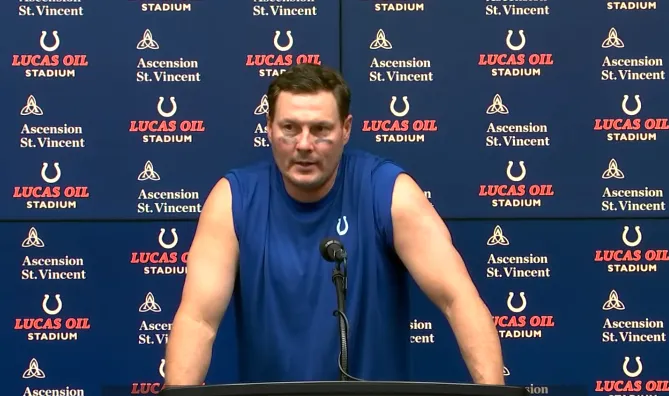
Week 16 of the NFL season delivered a one-sided scoreline — and a postgame moment that quickly drew league-wide attention. Philip Rivers, the veteran quarterback of the Indianapolis Colts
, has issued a public apology after declining a jersey swap following Indianapolis’ 48–27 home loss to the San Francisco 49ers on December 22, 2025.
The context made the moment even heavier. The matchup marked Rivers’
first game back after 5-years retirement, returning to the field at 44 years old in an emotionally charged comeback that placed intense pressure on both himself and the Colts. Expectations were high inside Lucas Oil Stadium, but the night quickly unraveled.
San Francisco controlled the game from the opening drive, overwhelming Indianapolis with pace, physicality, and defensive discipline. While Rivers showed flashes of composure and leadership in his return, the Colts were unable to slow the 49ers’ momentum. By the fourth quarter, the outcome was clear — yet the frustration of a difficult home loss weighed heavily as the final whistle sounded.
As players gathered near midfield, a young 49ers defensive lineman approached Rivers with a handshake and a respectful request to exchange jerseys — a gesture meant to honor competition, not the scoreboard. Still visibly emotional after the defeat and the pressure of his return, Rivers declined and walked toward the tunnel. The brief exchange was caught on camera and spread rapidly across social media, igniting debate around sportsmanship, age, legacy, and how veteran leaders process disappointment.
The rookie was later identified as Alfred Collins. Less than 24 hours later, Rivers addressed the incident publicly, offering a candid and reflective apology:
“Coming back to this game after time away, especially at my age, meant a lot to me — and I let the loss overwhelm that moment. Alfred came to me with respect, and I didn’t respond the way I should have. That’s on me. He earned that exchange, and next time, I’ll make sure I handle it better.”
Thrust into a meaningful role late in the season, Collins delivered one of his most complete performances to date — consistently collapsing the pocket, disrupting timing in the passing game, and helping set the physical tone that defined the 49ers’ dominance. His presence was felt well beyond the stat sheet, reinforcing why the coaching staff has increasingly trusted him in high-leverage situations and why veterans around him have spoken openly about his impact on the unit’s energy and discipline.
The apology was widely praised across the league. Players and analysts commended Rivers for acknowledging the emotional weight of his return while still taking responsibility. From the 49ers’ side, teammates noted the maturity shown by Collins, who approached the situation with humility despite being a rookie on a national stage. Collins later responded quietly, saying the apology “meant a lot coming from someone whose career I’ve respected for years.”
For Indianapolis, the loss underscored the challenges of a season filled with transition, pressure, and unanswered questions. For San Francisco, the win reinforced their late-season surge and the growing confidence of their young defensive core. But beyond standings and statistics, the moment served as a reminder that leadership is often defined not in triumph — but in how veterans respond when emotions run highest.
When these two competitors meet again, fans may remember more than the 48–27 final score. They’ll remember a lesson forged at the intersection of comeback, frustration, humility, and mutual respect — a moment that spoke quietly, but powerfully, about the human side of the game.