The Las Vegas Raiders have quietly taken a decisive step with their quarterback room: Geno Smith no longer appears in the franchise’s blueprint for the 2026 season. As that internal decision settles in, the Minnesota Vikings are already moving, positioning Smith as a central piece in their plan to upgrade the roster for next year.

Minnesota’s urgency comes from hard reality. J.J. McCarthy’s first six NFL starts contain electric flashes but also extended stretches of struggle. The 22-year-old completes just 54.1 percent of his passes and averages 154.8 yards per game, with six touchdowns offset by 10 interceptions. The comeback masterpiece with two passing scores and a rushing touchdown, plus a two-touchdown opening quarter against the Detroit Lions in Week 9, proves the upside exists. The week-to-week floor, however, still sits far too low for a team that expects playoff conversation, not growing pains, in 2026.
Inside TCO Performance Center, the Vikings no longer treat 2026 as a pure “ride or die with McCarthy” project. The front office demands a proven veteran presence in the quarterback room, not just as competition but as real insurance. Names such as Daniel Jones, Aaron Rodgers, and Mac Jones appear on early internal boards, yet each path carries major obstacles — massive money, retirement questions, or trade cost. As the Raiders’ situation with Geno Smith shifts, Minnesota’s focus locks in on one target.
On paper, Smith’s 2025 campaign in Las Vegas looks messy. The Raiders sit at 2–10, and the veteran leads the league with 14 interceptions. Look deeper, and the story changes. Smith completes 67.3 percent of his passes for 2,532 yards and 15 touchdowns behind one of the most erratic offensive lines in football. Protection frequently collapses, forcing rushed throws, altered launch points, and desperate decisions. Not every turnover traces back to blocking, but a chunk of those mistakes clearly stems from survival mode, not reckless freelancing.
For the Vikings, the evaluation never stops at one rough season. Decision-makers study the larger body of work. Smith stands only a short distance removed from back-to-back Pro Bowl campaigns with the Seattle Seahawks in 2022 and 2023, including a career-best 4,320 passing yards and a 10–7 record just last year. That version of Geno — efficient, calm, aggressive when necessary — remains the template Minnesota believes it can tap into.
Kevin O’Connell plays a massive role in that belief. The Vikings head coach already built a reputation as a stabilizer for veterans in need of a reset, with the Sam Darnold revival serving as the clearest example. Staffers view Smith as the next iteration of that model: a quarterback with enough mileage to read the field at a high level, yet still hungry enough to embrace coaching, structure, and accountability. Inside the building, voices describe him as “the veteran this room needs, not a placeholder.”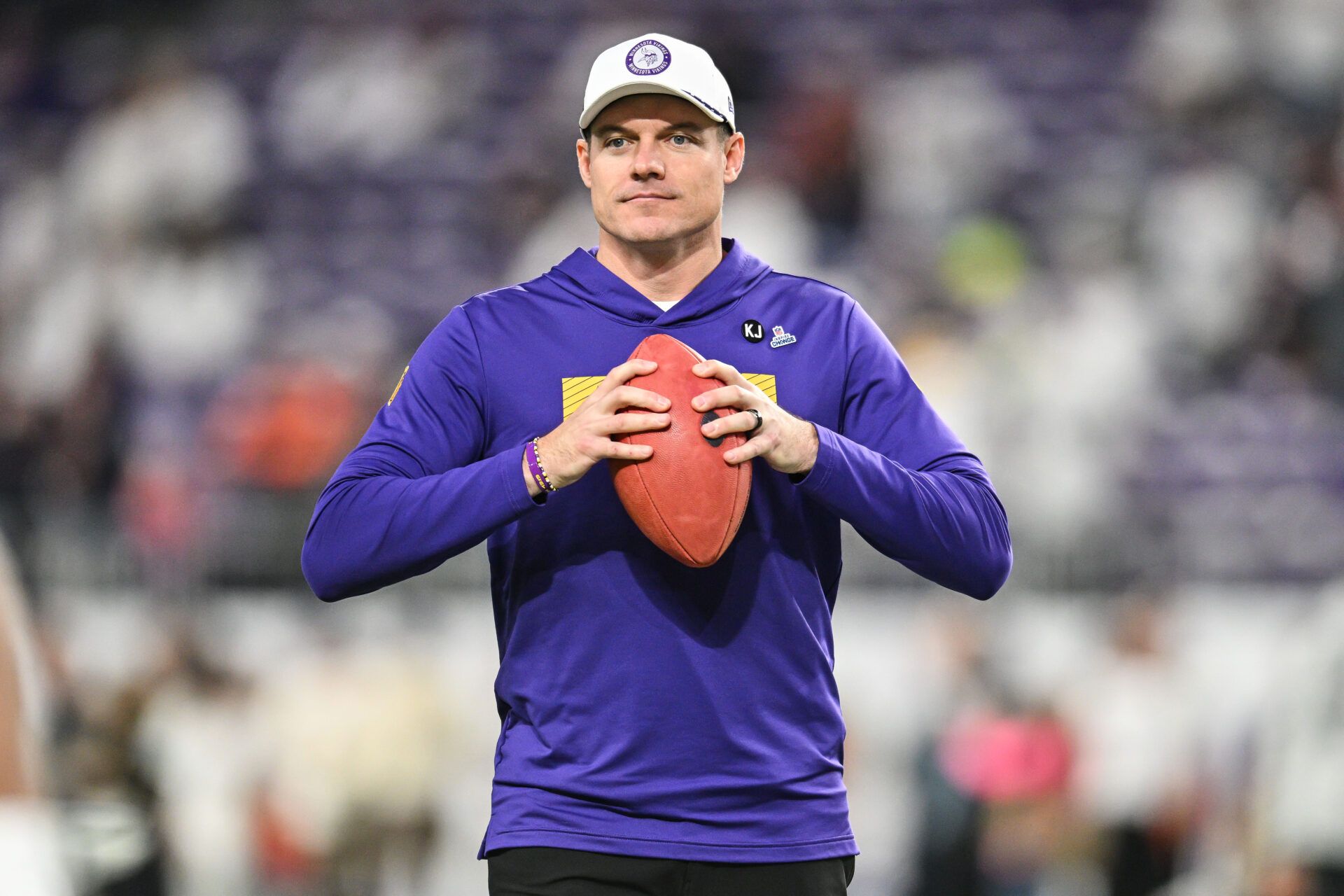
The contract puzzle pushes the Raiders and Vikings in opposite directions. Smith’s current deal in Las Vegas runs through the 2027 season, with a cap hit of $26.5 million in 2026 and a staggering $39.5 million in 2027. Those numbers no longer align with a franchise that already removed him from future plans. A release, especially with post–June 1 designation, opens flexibility and eliminates the risk of injury guarantees. Minnesota, meanwhile, has no interest in surrendering draft capital or absorbing that existing structure. The entire approach centers on a clean break between Smith and the Raiders, then a fresh, team-friendly agreement in purple.
From the Vikings’ perspective, the vision for 2026 now looks clear. McCarthy remains part of the long-term equation, yet he no longer carries the entire burden alone. A quarterback room featuring Geno Smith and J.J. McCarthy sends a sharp message to the locker room: competition is real, standards are non-negotiable, and the franchise refuses to waste another year waiting for potential to mature. Training camp turns into a daily exam, not a coronation.
For Las Vegas, moving on from Smith signals another reset in a long search for stability at the game’s most important position. For Minnesota, aggressively stepping into the opening transforms a rival’s castoff into a central pillar of a new-season push. And for Geno Smith, the next chapter now points toward a city and a coaching staff that treats his career not as a reclamation project, but as a crucial bridge between raw talent and a roster built to contend again.