Senators’ Video Urging Troops to Refuse Illegal Orders Triggers Political Clash With White House
Washington — A video released this week by six Democratic lawmakers — all former members of the military or intelligence community — has ignited an escalating confrontation with the White House after President Donald J. Trump and Defense Secretary Pete Hegseth accused the group of promoting sedition. The lawmakers say they were reminding service members of longstanding obligations under military law.
The video, recorded by Senator Alyssa Sodkin, Senator Mark Kelly, Representative Chris Deluzio, Representative Chrissy Houlahan, Representative Jason Crow, and Congresswoman Maggie Goodlander, delivers a direct message to active-duty personnel. Speaking in rotation, the officials emphasize that members of the armed forces must uphold their oath to the Constitution and are legally required to refuse unlawful orders.
“You all swore an oath to protect and defend this Constitution,” Senator Sodkin says in the opening. “Our laws are clear. You can refuse illegal orders. You must refuse illegal orders.” The lawmakers cite rising pressure within the national security community and argue that recent military operations have raised legal and ethical concerns.
A Warning Amid Rising Tensions
The backdrop to the video is a series of U.S. military strikes in Venezuela that administration officials describe as counter-narcotics operations. Critics — including several retired admirals and former Defense Department lawyers — have questioned the legal basis for the strikes, noting that Congress has not authorized the use of military force in Venezuela.
Bobby Jones, a retired Navy veteran and commentator with Miners Touch and Valent Media Networks, said in a follow-up analysis that the senators were “reiterating training every service member hears from the first day of boot camp.” He noted that the U.S. Navy’s board-and-search procedures, known as VBSS, are designed to allow the seizure of illicit materials with due process, contrasting them with what he described as “indiscriminate strikes” lacking publicly released evidence.
In recent months, military officers have reportedly sought independent legal assessments outside the Pentagon regarding the lawfulness of certain orders. Admiral Harold Halley, former head of U.S. Southern Command, resigned earlier this year; colleagues close to him said privately that he had expressed discomfort about operational directives.
White House Reaction and Legal Debate
President Trump responded to the lawmakers’ video with unusually sharp language, calling the message “seditious” and suggesting that the participants should “face consequences.” The White House has since softened its stance, but the president has continued to argue that the elected officials “undermined confidence” in civilian command.
Several legal experts emphasized that the senators’ statements reflect established military doctrine. Under the Uniform Code of Military Justice, service members are required to disobey orders that are “manifestly unlawful,” a standard reaffirmed in training and in case law following events such as My Lai during the Vietnam War and abuses at Abu Ghraib in the early 2000s.
The most controversial response came from Defense Secretary Hegseth, who suggested he was considering recalling Senator Kelly — a retired Navy captain and former NASA astronaut — to active duty to face a court-martial. Senator Kelly, the only retiree among the six, remains subject to the UCMJ.
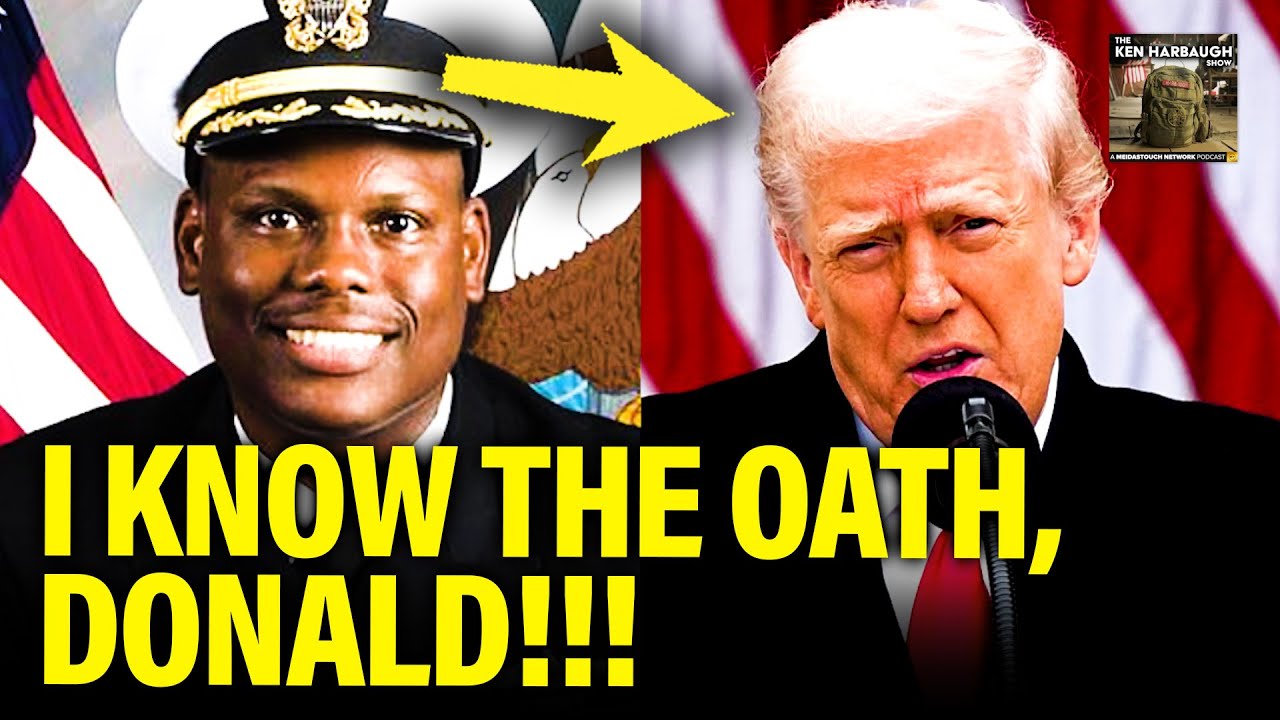
Military lawyers interviewed by multiple outlets said such a move would be unprecedented and likely untenable. “Recalling a political opponent to prosecute them for statements made in their official duties would raise profound constitutional and legal issues,” said Rachel Menendez, a former judge advocate in the Navy. She added that any public statements by Secretary Hegseth about the expected outcome of a case could be considered unlawful command influence, which typically requires the dismissal of charges.
Profiles and Historical Context
Senator Kelly, who flew combat missions over Iraq and later piloted the Space Shuttle, is widely viewed as one of the most respected military veterans in Congress. He is married to former Representative Gabrielle Giffords, who survived an assassination attempt in 2011.
Representative Jason Crow, a former Army Ranger who served multiple tours in Iraq and Afghanistan, and Representative Houlahan, an Air Force veteran, have been outspoken in recent weeks about the need to maintain nonpolitical norms within the armed forces.
The lawmakers argue that their message is consistent with Congress’s constitutional responsibilities, which include raising, regulating, and funding the military. “It is well within their oversight role,” Mr. Jones said in his commentary. “Congress is expected to ensure that the armed forces operate within the law.”
Historical precedents loom large in the debate. Analysts note that congressional and military leaders have periodically intervened when commands were viewed as unlawful — from President Truman’s removal of General Douglas MacArthur during the Korean War to congressional investigations into Iran-Contra operations in the 1980s.
An Ongoing Point of National Friction
The controversy has widened an existing rift between the White House and parts of the national security establishment. While some Republican lawmakers have backed the president, others have privately expressed concern that efforts to discipline congressional critics could erode longstanding norms separating military operations from partisan politics.
For now, the six lawmakers have said they will not retract their message. “The American military does not pledge an oath to any person,” Senator Sodkin said in a written statement on Friday. “It pledges an oath to the Constitution.”
Pentagon officials have not confirmed whether Secretary Hegseth will pursue the recall of Senator Kelly. Several current and former officers said they expect the plan to be abandoned quietly in the face of legal obstacles.
The broader debate — over the limits of presidential authority, the independence of the military, and the role of Congress — is likely to continue as the administration faces rising scrutiny over its operations abroad and its handling of internal dissent.