The Panthers’ locker room carried a tense energy as players processed the aftermath of Monday night’s clash and the disciplinary decisions that followed. Conversations were sharp, emotions were high, and the sense of controversy lingered heavily.
Coaches attempted to keep the group focused on their next matchup, yet the off-field noise proved impossible to ignore. The league’s disciplinary announcement sent ripples through the organization, shifting the narrative away from football preparation.
That shift intensified when Tre’von Moehrig formally filed an appeal, challenging the NFL’s fine issued after the on-field altercation with the 49ers. His decision reignited debate regarding accountability, sportsmanship, and fairness in high-pressure late-season games.
“I’m asking for consistency. If I’m being punished, then everyone involved should be held to the same standard,” he said during a brief locker-room scrum, delivering a pointed message toward the league office.
The situation drew national attention as analysts dissected the slow-motion replays, debating whether the initial contact or the postgame retaliation amounted to greater wrongdoing. The league’s crackdown on unsportsmanlike conduct only intensified scrutiny.
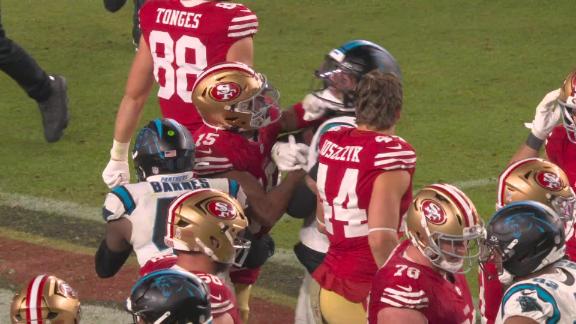
Moehrig’s appeal also put renewed spotlight on Jauan Jennings, whose response after the final whistle triggered its own wave of criticism. While the league issued discipline for both, the severity discrepancy sparked widespread backlash.
Panthers veterans privately voiced concerns that the penalties did not reflect the emotional complexity of the moment. Some insisted the league must better interpret intent, especially during heated late-game exchanges where frustrations naturally escalate.
Inside team headquarters, officials expressed disappointment that the disciplinary fallout overshadowed a strong defensive performance. They emphasized moving forward but acknowledged that league matters often disrupt even the most disciplined locker rooms.
Meanwhile, 49ers leadership defended their player while also calling for improved protocol. They stressed that the league should evaluate game-flow context before determining punishment, especially in matchups featuring playoff-level physicality.
Reporters noted that film review showed both players contributing to the escalation, raising difficult questions about where the league draws the line. Many argued that consistency—not severity—remains the league’s most persistent disciplinary issue.
Moehrig’s appeal now becomes a pivotal moment for players league-wide, potentially influencing how future altercations are judged. His challenge could reshape expectations for what constitutes “fair discipline” amid the league’s evolving enforcement standards.
As the Panthers prepare for their next test, the young defensive back’s fight for fairness continues to command headlines. Whether the league adjusts its stance remains uncertain, but the controversy has already reshaped the week’s NFL narrative.